Chopta Chandrashila Trek — Trek, best view — Garhwal Himalayas, Kedarnath Wildlife Sanctuary, Uttarakhand

Chopta Chandrashila Trek

Garhwal Himalayas, Kedarnath Wildlife Sanctuary, Uttarakhand

A short Himalayan climb through forests to Tungnath Temple and a sunrise summit with unforgettable 360° mountain views.

Altitude

12083 ft

Duration

3 Days

Difficulty

Easy to Moderate

Best time

Mar – Jun Sep – Nov Dec – Feb

Standout Experiences

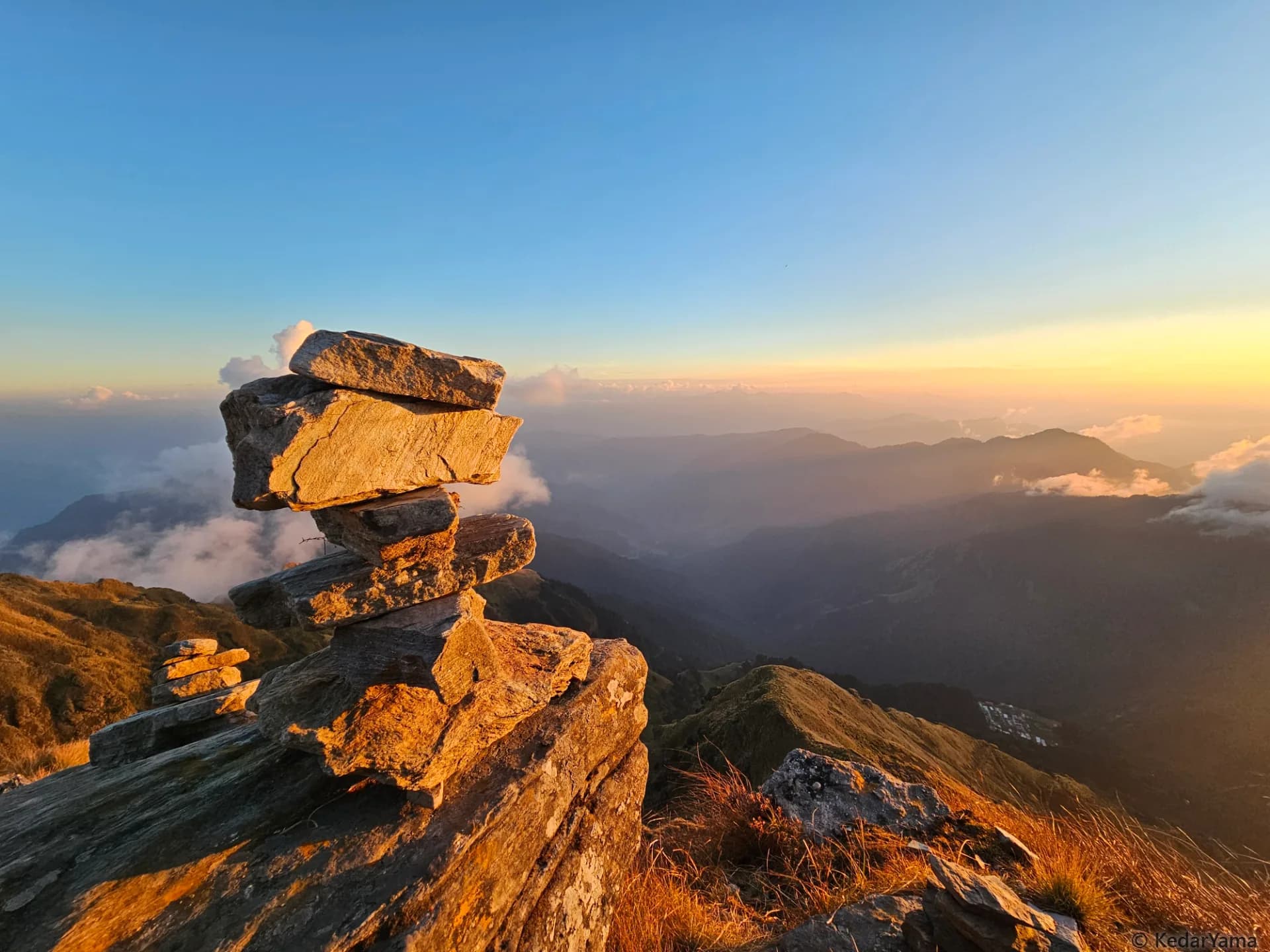
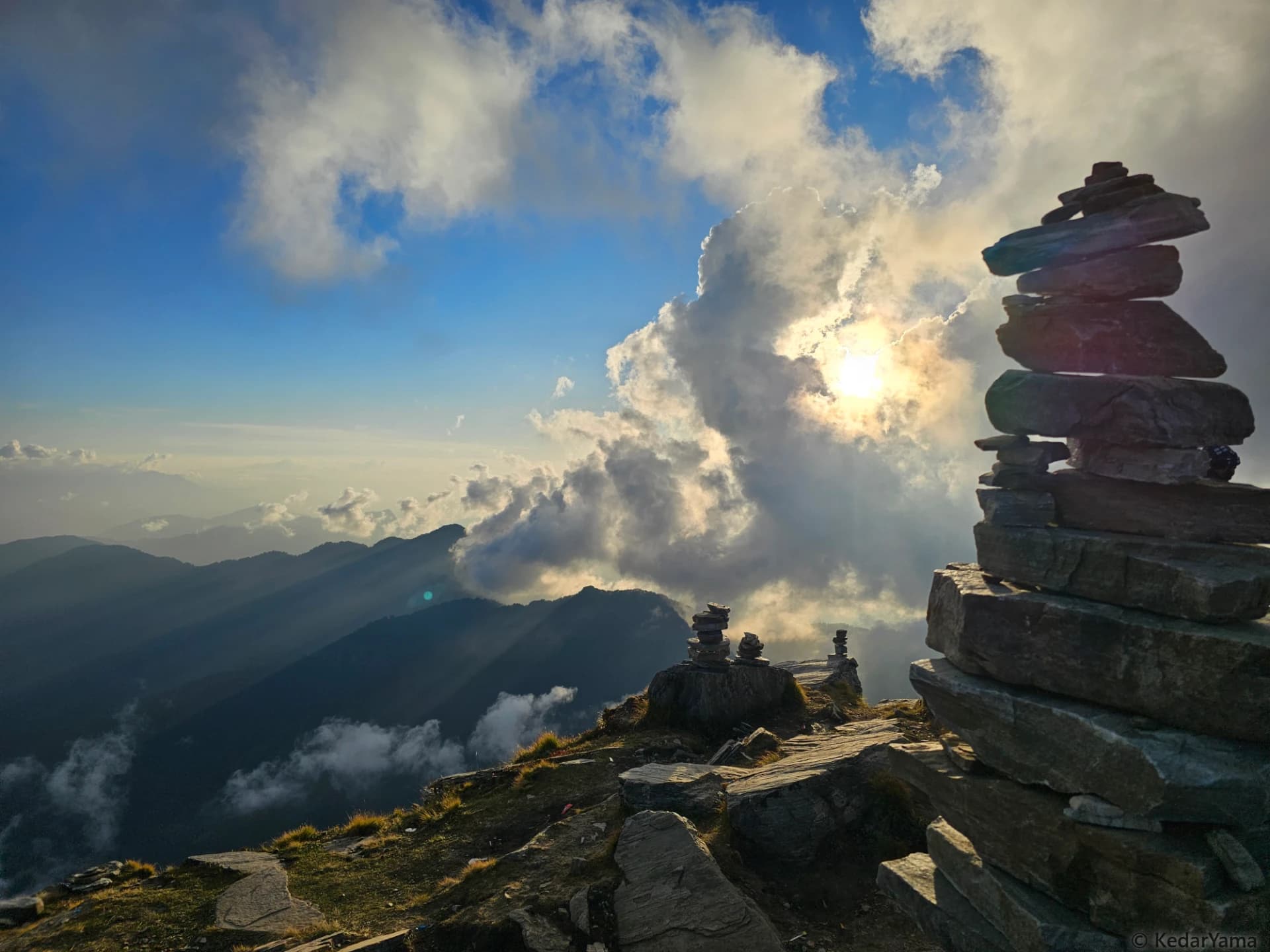
  • Watch the sunrise from Chandrashila as the first light slowly reaches Chaukhamba and the surrounding Himalayan peaks.
  • Visit Tungnath, the highest Shiva temple in the world, before continuing to the summit.
  • Finish a genuine Himalayan summit trek over a long weekend without needing high-altitude expedition experience.
  • Experience the same trail in completely different moods—from red rhododendron blooms in spring to deep snow in winter.
  • Trek to Deoriatal, an alpine lake famous for its crystal-clear reflections of Chaukhamba, as a bonus excursion on the return day.

Overview

Updated 15 Jul 2026

  • The Chopta Chandrashila Trek is one of the few Himalayan treks where you can stand on a 3,683 m summit over a single long weekend. The route begins from Sari village near Chopta, climbs through forests of oak and rhododendron, reaches Tungnath—the highest Shiva temple in the world—and finishes with a steep but rewarding push to Chandrashila Peak, with a bonus trek to the alpine lake of Deoriatal on the way out. From the summit, you'll see a huge sweep of Himalayan giants including Chaukhamba, Nanda Devi, Trishul, Kedar Dome and Bandarpoonch on a clear morning.
  • Every season changes the personality of this trek. March and April cover the trail in bright rhododendron flowers. Summer brings cool weather and clear mountain views. October and November are famous for crisp skies and the sharpest panoramas after the monsoon. Winter turns the entire route into a snow trek, making the climb to Chandrashila feel like a completely different adventure. That variety is why many trekkers return more than once.

Trek essentials

Max altitude

12,083 ft

Duration

3 Days

Total distance

14 km

Elevation gain

5,482 ft
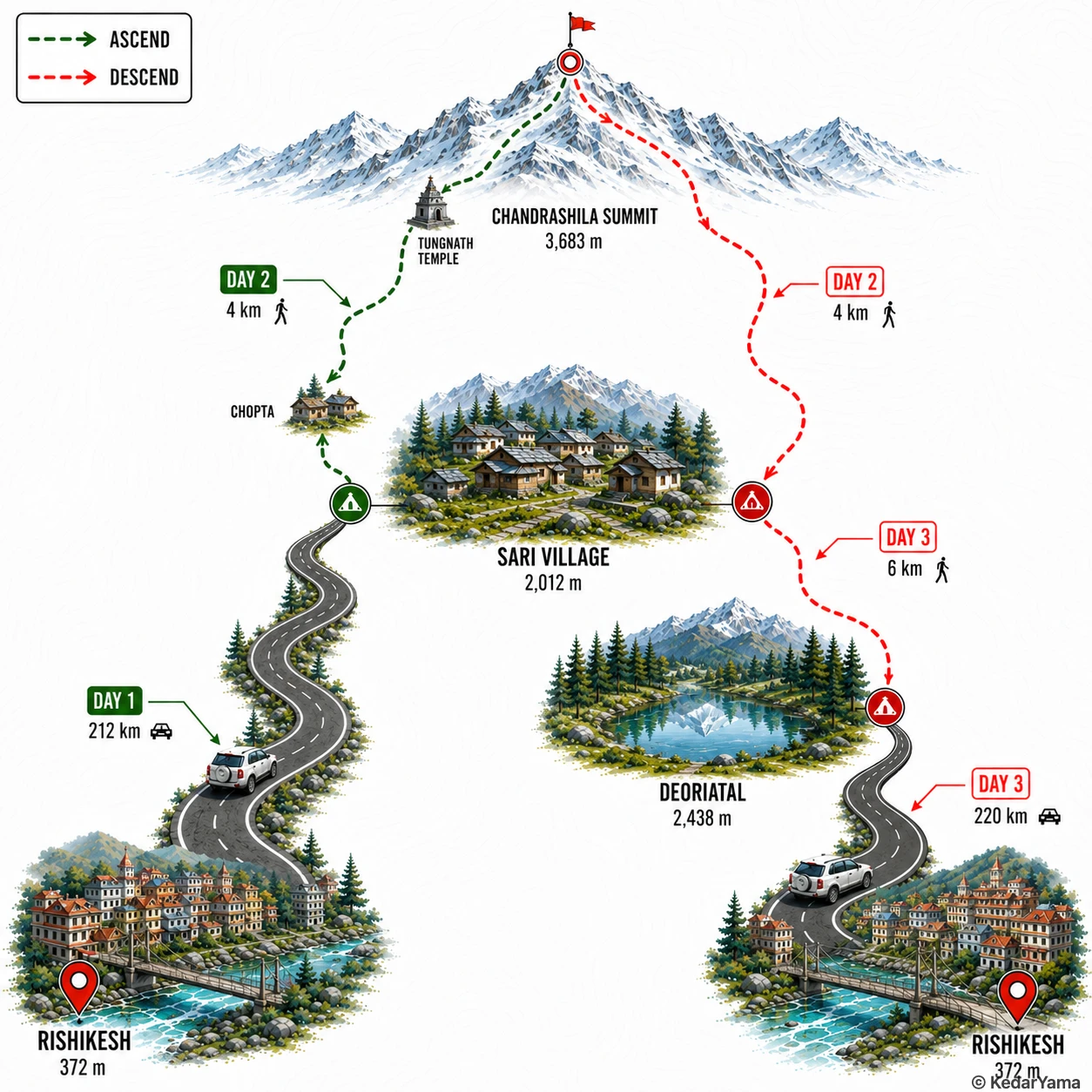
Trek Route

Graphical route map — high resolution terrain visualization

Detailed Itinerary

holiday_villageStayHomestay
signal_cellular_altDataPartial
boltPowerAvailable
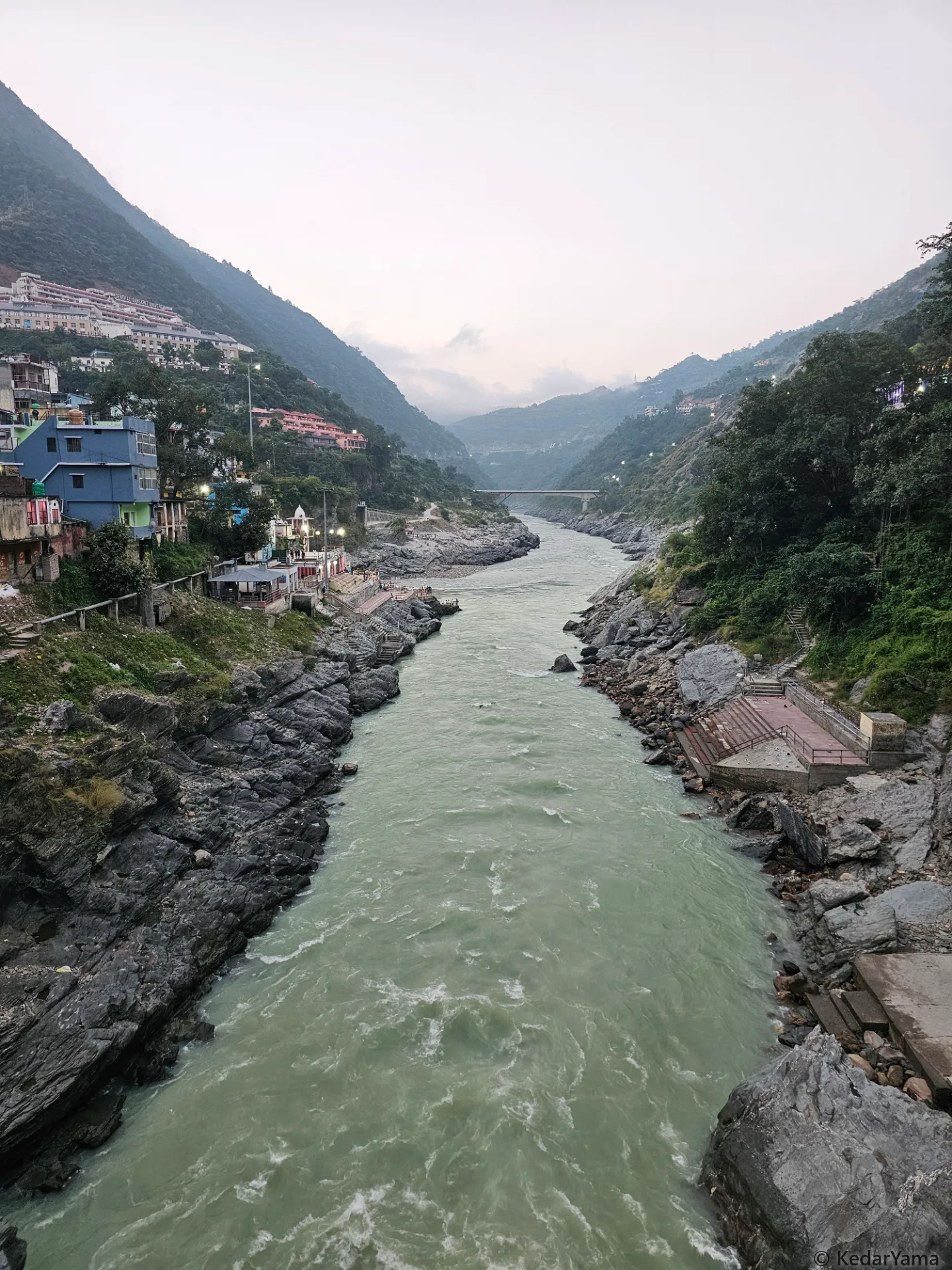
  • Pickup is at 7:30 AM from Rishikesh Tapovan for the roughly 212 km drive into the Garhwal Himalayas, following the Ganga and Alaknanda valleys through Devprayag, Rudraprayag and Ukhimath — a scenic 8–9 hour journey with stops for breakfast and lunch along the way.
  • The road climbs steadily through dense forests and mountain villages, with plenty of viewpoints over the river valleys as you head toward Chopta, often called the 'Mini Switzerland' of India.
  • Arrive at Sari village (2,012 m) by evening and check into your hotel or camp. Have a warm dinner and take in the starry Himalayan sky before an early night.
  • Rest well and pack a daypack — tomorrow's trek to Tungnath and Chandrashila starts early and climbs to nearly 3,700 metres.

Images

Packing List

Must Have

Trekking Boots

layers

3-Layer Clothes

water_drop

Hydration

timeline

Trekking Pole

ac_unit

Down Jacket

back_hand

Gloves

Woolen Socks

Woolen Socks

lightbulb

Headlamp

thermostat

Thermal Layers

medical_services

First Aid Kit

Good to Have

battery_charging_full

Power Bank

photo_camera

Action Cam

checkroom

Quick-dry Towel

front_hand

Winter Gloves

directions_walk

Trek Gaiters

water_full

Hydration Bladder

Technical Overview

terrain

Trail & Terrain

The trek starts on a broad stone-paved pilgrimage path that climbs steadily through dense oak, rhododendron and deodar forests before opening into alpine meadows near Tungnath. The final stretch to Chandrashila is steeper with rocky steps and exposed ridgelines. During winter the same trail is usually covered in snow and often requires careful footing, especially on the last ascent.

info

Altitude & Fitness

Although the distance is short, the rapid climb from Chopta to nearly 3,700 metres makes the trek feel more demanding than the numbers suggest. Most healthy beginners can complete it with steady pacing, regular hydration and short breaks. If travelling directly from the plains, spending a night at Chopta before the summit attempt helps with acclimatization.

ac_unit

Weather Through the Year

Spring brings blooming rhododendrons and pleasant trekking temperatures, while autumn offers crystal-clear Himalayan views. Winter transforms the trail into a snow trek with sub-zero mornings and deep snow near Tungnath and Chandrashila. The monsoon season receives frequent rain, slippery paths and occasional road disruptions.

info

Nature & Wildlife

The lower forest is rich with oak, maple, deodar and rhododendron trees that burst into bright red blooms during spring. Himalayan monals, langurs and several mountain bird species are commonly spotted by patient trekkers. Once above the tree line, vast bugyals and panoramic Himalayan ridges dominate the landscape.

When to Visit

local_florist

Rhododendron Bloom

March – April

The forests around Chopta come alive with bright red and pink rhododendron flowers. Days are pleasant, nights stay cool, and the mountain views improve as winter ends.

calendar_today

Clear Mountain Trails

May – June

Comfortable temperatures and mostly clear skies make this the easiest season for beginners. Meadows turn green and long Himalayan views are common on clear mornings.

calendar_today

Sharp Himalayan Views

September – November

After the monsoon, the air becomes clean and visibility is excellent. This is one of the best seasons for photography and sunrise from Chandrashila.

ac_unit

Snow Trek Experience

December – February

Fresh snowfall transforms the entire trail into a white landscape. Expect colder temperatures, icy sections and occasional road disruptions after heavy snow.

Other Information

Logistics & inclusions

  • check_circleReach Chopta by road from Rishikesh or Haridwar via Devprayag, Rudraprayag and Ukhimath (7–9 hours).
  • check_circleMost trekkers stay in camps, cottages or homestays around Chopta or Baniyakund before starting early next morning.
  • check_circleCarry only a daypack for the summit trek and leave extra luggage at your accommodation.
  • check_circleShared jeeps and taxis are available between Ukhimath and Chopta during the tourist season.
  • check_circleFood stalls operate near Tungnath during the temple season but are usually closed during heavy snowfall.

Permits

Required: No

No trekking permit is normally required for the standard Chopta–Tungnath–Chandrashila route. Entry or parking charges may apply at local forest check posts, and winter restrictions can be imposed during heavy snowfall.

Safety

Risks

  • Altitude-related discomfort due to rapid ascent.
  • Slippery stone steps during rain or snow.
  • Heavy snowfall can hide the trail and block roads to Chopta.
  • Cold winds and sudden weather changes near the summit.

Precautions

  • Start before sunrise to avoid afternoon clouds and crowds.
  • Wear layered clothing and waterproof trekking shoes with good grip.
  • Carry at least two litres of water and energy snacks.
  • Avoid attempting the summit during thunderstorms or whiteout conditions.
  • Hire a local guide if trekking in winter after fresh snowfall.

Emergency

The nearest medical facilities are at Ukhimath, while larger hospitals are available at Rudraprayag. Mobile connectivity is unreliable above Chopta, so inform your accommodation before leaving for the summit.

Reviews

Frequently Asked Questions

Is the Chopta Chandrashila Trek suitable for beginners?expand_more
What is the best time to do the Chopta Chandrashila Trek?expand_more
Can I see snow on the Chopta Chandrashila Trek?expand_more
How do I reach Chopta from Delhi or Haridwar?expand_more
Do I need a permit for the Chopta Chandrashila Trek?expand_more
How difficult is the climb from Tungnath to Chandrashila?expand_more
Which is better: Chopta Chandrashila or Kedarkantha Trek?expand_more