RS
Rohit Sharma
October 2025
“I expected a simple weekend trek, but standing at Chandrashila during sunrise felt unreal. The mountain views kept changing every minute.”
Garhwal Himalayas, Uttarakhand
“A short Himalayan climb to the world's highest Shiva temple, ending with a sunrise from Chandrashila.”
Altitude
13123 ft
Duration
3 Days
Difficulty
Easy to Moderate
Best time
Apr – Jun Sep – Nov
Updated 10 Aug 2026
Max altitude
13,123 ft
Duration
3 Days
Total distance
10 km
Elevation gain
3,379 ft
Trek type
OUT_AND_BACK
Starting point
Chopta
Trail type
Stone-paved mountain trail through alpine forest and meadows
Average cost (indicative)
₹6,000–₹10,000 per person (guided package from Rishikesh); ₹2,500–₹5,000 for self-planned trip excluding transport
Temp. range (°C)
-8°C to 20°C depending on season
Snow months
December to March
Rain risk
High during July to early September due to the monsoon
Temple Altitude
3,680 m
Summit
Chandrashila Peak
Summit Push
About 1.5 km from Tungnath Temple
Mobile Network
Patchy near Chopta, very limited on the trail
Accommodation
Guesthouses, camps and homestays around Chopta/Baniyakund
Trekking Boots
3-Layer Clothes
Hydration
Trekking Pole
Down Jacket
Gloves

Woolen Socks
Thermal Layers
First Aid Kit
Power Bank
Action Cam
Headlamp
Quick-dry Towel
Winter Gloves
Trek Gaiters
Hydration Bladder
The Tungnath trail is one of the best-maintained Himalayan trekking routes, paved almost entirely with broad stone steps from Chopta to the temple. The climb is continuous but gradual enough for beginners with average fitness. Beyond Tungnath, the final stretch to Chandrashila becomes steeper with rocky sections and can hold hard-packed snow during winter. There are no technical climbing sections, but snow and ice can make the summit ridge slippery.
Spring brings blooming rhododendron forests and pleasant daytime temperatures, while autumn offers crystal-clear mountain views after the monsoon. Winter transforms the trail into a snow trek, often requiring microspikes when ice builds up near the summit. During the monsoon, frequent rain, mist and slippery stone paths make trekking slower and visibility unpredictable.
The lower trail passes through dense oak, deodar and rhododendron forests before opening into alpine bugyals near Tungnath. In spring, the hillsides burst into shades of red and pink with rhododendron flowers. Birdwatchers often spot the Himalayan Monal, while musk deer, Himalayan langurs and foxes inhabit the surrounding forests though sightings remain occasional.
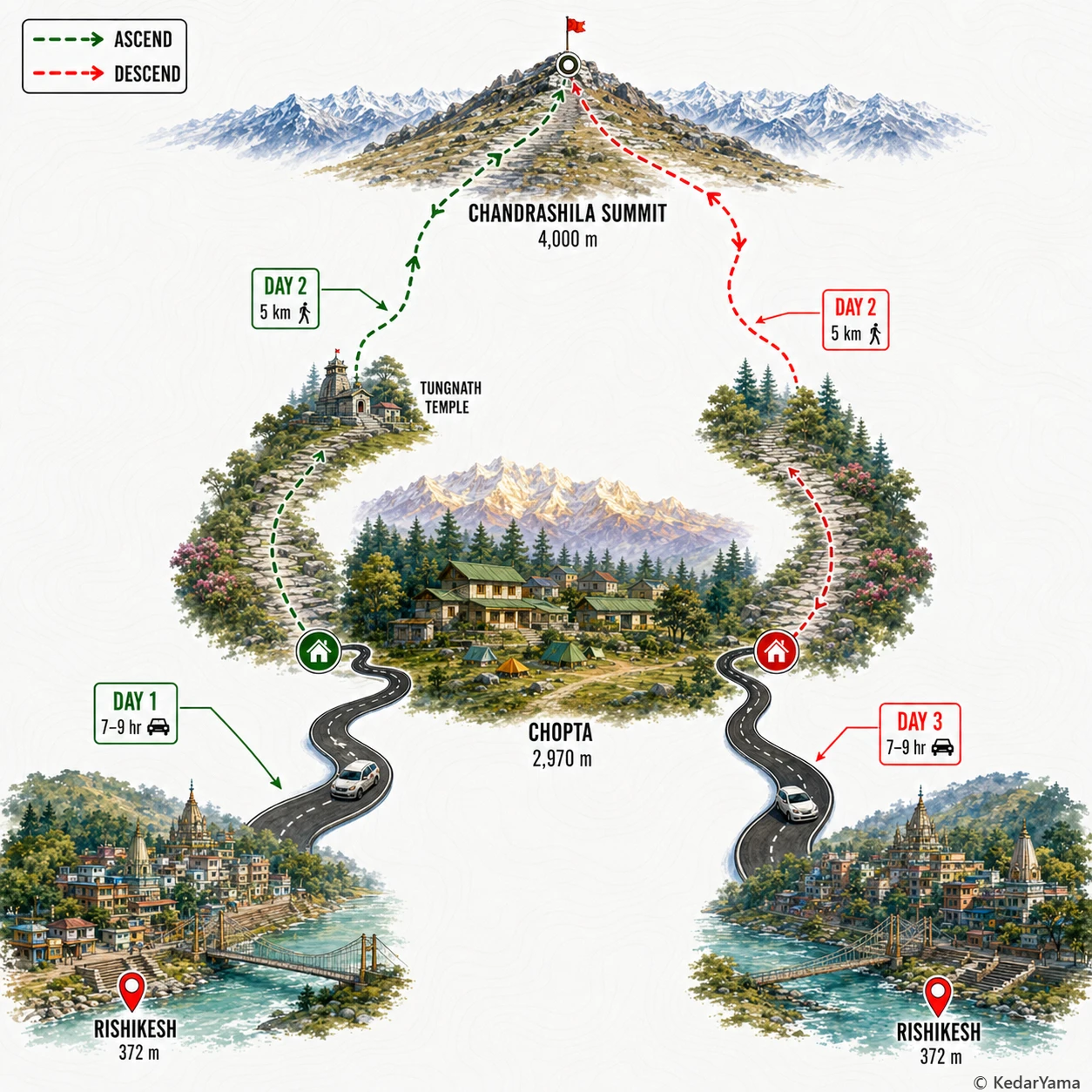
Although the trek is short, the altitude rises from around 2,970 m at Chopta to nearly 4,000 m at Chandrashila. Most trekkers complete the ascent comfortably in 3 to 4 hours, but the thinner air is noticeable above Tungnath. Walking at a steady pace, staying hydrated and avoiding rushing the final climb significantly reduce fatigue.
April – June
The forests around Chopta come alive with blooming rhododendrons, comfortable temperatures and clear skies. This is the most popular season for first-time trekkers and families.
July – August
The mountains turn lush green, but frequent rain, slippery trails and cloud cover reduce visibility. Trekking is possible only if weather conditions remain safe.
September – November
Fresh post-monsoon air brings some of the sharpest Himalayan views of the year. Pleasant weather and stable trail conditions make this one of the best trekking seasons.
December – March
The route becomes a beautiful snow trek with frozen landscapes and quiet trails. Tungnath Temple stays closed during winter, and proper snow gear is essential.
Required: No
No trekking permit is normally required for the standard Chopta–Tungnath–Chandrashila route. Visitors may pay nominal parking or local entry charges depending on the season, while temple timings and winter closures should be checked before travel.
The nearest medical facilities are at Ukhimath, with larger hospitals available in Rudraprayag. Mobile connectivity is unreliable beyond Chopta, so inform your accommodation about your trekking plan before departure.