RM
Rahul Mehta
September 2025
“Camping beside Tarsar Lake was the highlight of my Kashmir trip. Every day looked different, and the Marsar viewpoint is something I'll never forget.”
Lidder Valley, Kashmir Himalayas, Jammu and Kashmir
“Camp beside Kashmir's twin alpine lakes as wildflower meadows, pine forests, and quiet valleys unfold day after day.”
Altitude
13500 ft
Duration
7 Days
Difficulty
Moderate
Best time
Jul – Sep
Updated 11 Aug 2026
Max altitude
13,500 ft
Duration
7 Days
Total distance
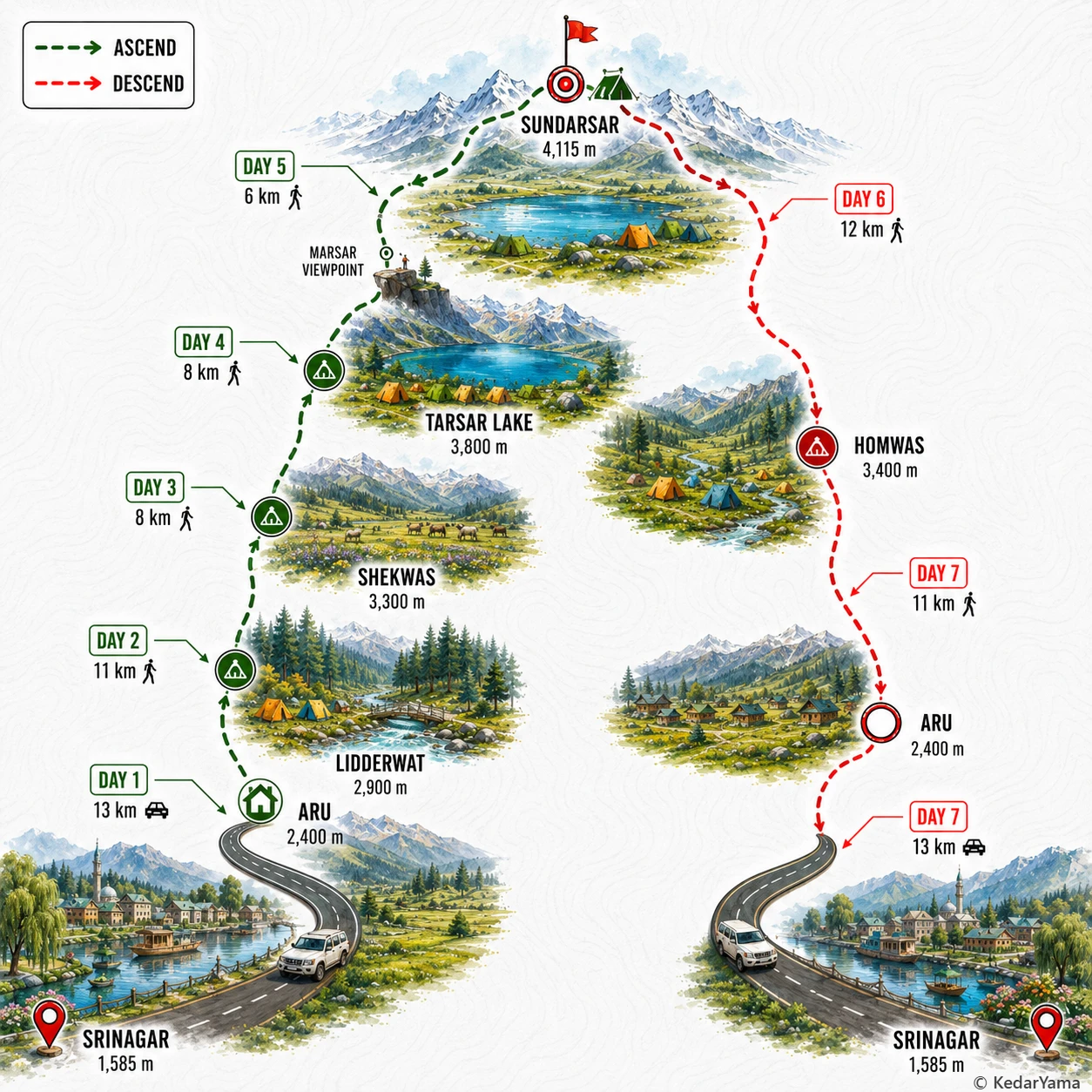
48 km
Elevation gain
5,577 ft
Trek type
Loop
Starting point
Aru
Trail type
Alpine lake trek through forests and meadows
Average cost (indicative)
₹15000–₹19000 per person from Srinagar (7-day package)
Temp. range (°C)
5°C to 22°C
Snow months
Late June to early July (patches), October onward
Rain risk
Low to moderate; Kashmir lies in the Pir Panjal rain shadow
Best Season
July to September
Nearest Airport
Srinagar International Airport
Nearest Railway Station
Jammu Tawi
Base Camp
Aru, Pahalgam
Mobile Network
Works until Aru; intermittent afterwards
Trekking Boots
3-Layer Clothes
50L Backpack
Hydration
Trekking Pole
Down Jacket
Gloves

Woolen Socks
Headlamp
Thermal Layers
First Aid Kit
Action Cam
Power Bank
Quick-dry Towel
Hydration Bladder
Trek Gaiters
Winter Gloves
The trek begins on wide shepherd trails through pine forests before gradually opening into expansive alpine meadows. Most walking is on dirt paths with occasional rocky sections, stream crossings and short boulder fields near the lakes. There are no technical climbing sections, but several days involve sustained ascents and descents above 3,000 metres. Good ankle support and trekking poles make the journey much more comfortable.
Although the highest point is around 13,500 ft, the itinerary gains altitude gradually, allowing most trekkers to acclimatise well. Stay hydrated throughout the trek and avoid rushing on ascent days. Mild symptoms like headache or breathlessness can occur above 10,000 ft, so communicate any discomfort to your trek leader immediately. Adequate rest, warm clothing and proper pacing are the keys to enjoying the trek.
Days are generally pleasant with temperatures between 12°C and 22°C while nights can drop to 5°C or even lower near the lakes. July brings lingering snow patches and lush green meadows, August offers peak wildflower blooms and September rewards trekkers with crisp skies and excellent mountain views. Sudden winds and brief showers are possible even during the trekking season, so waterproof layers are essential.
The trail passes through dense pine, fir and birch forests before entering vast alpine grasslands dotted with wildflowers. Gujjar shepherd camps and grazing horses are common throughout the route. Lucky trekkers may spot Himalayan monal, marmots, langurs, foxes and numerous alpine birds. The twin lakes of Tarsar and Marsar remain the defining natural highlights of the trek.
July – August
Fresh green meadows, blooming wildflowers, flowing streams, and brilliant blue alpine lakes define this period. Expect pleasant daytime temperatures, cool nights, and the most popular trekking season.
September
The meadows begin turning golden, skies are often clearer, and crowds become slightly smaller. Nights are colder, but mountain views and lake reflections are at their best.
Required: Yes
Forest and local trekking permissions are mandatory for the Aru–Lidderwat–Tarsar region. Organised trekking operators usually arrange all permits and environmental fees as part of the package.
Nearest major medical facilities are at Pahalgam and Srinagar. Satellite communication or radio carried by organised trek leaders is the primary emergency communication beyond Aru.