RM
Rohit Mehra
May 2026
“We planned one night but stayed three. Every walk from the meadow into the forest felt peaceful, and the sunrise over the surrounding mountains was unforgettable.”
Sainj Valley, Great Himalayan National Park Buffer Zone, Himachal Pradesh
“Walk across Shangarh's legendary meadow, forest trails, waterfalls, and Great Himalayan National Park viewpoints.”
Altitude
6903 ft
Duration
2 Days
Difficulty
Easy to Moderate
Best time
Mar – Jun Sep – Nov
Updated 10 Aug 2026
Max altitude
6,903 ft
Duration
2 Days
Total distance
12 km
Elevation gain
1,476 ft
Trek type
Point to Point
Starting point
Shangarh
Trail type
Forest and meadow trail
Average cost (indicative)
₹2,500–₹5,000 per person
Temp. range (°C)
5°C to 22°C
Snow months
December–February
Rain risk
High during July–September
Best Season
March–June and October–November
Nearest Bus Stop
Aut
Nearest Airport
Bhuntar (Kullu)
Mobile Network
Jio and BSNL work intermittently in Shangarh; little to no signal on the trail.
Trekking Boots
3-Layer Clothes
Hydration
50L Backpack
Trekking Pole
First Aid Kit
Headlamp
Power Bank
Quick-dry Towel
Action Cam
Gloves

Woolen Socks
Hydration Bladder
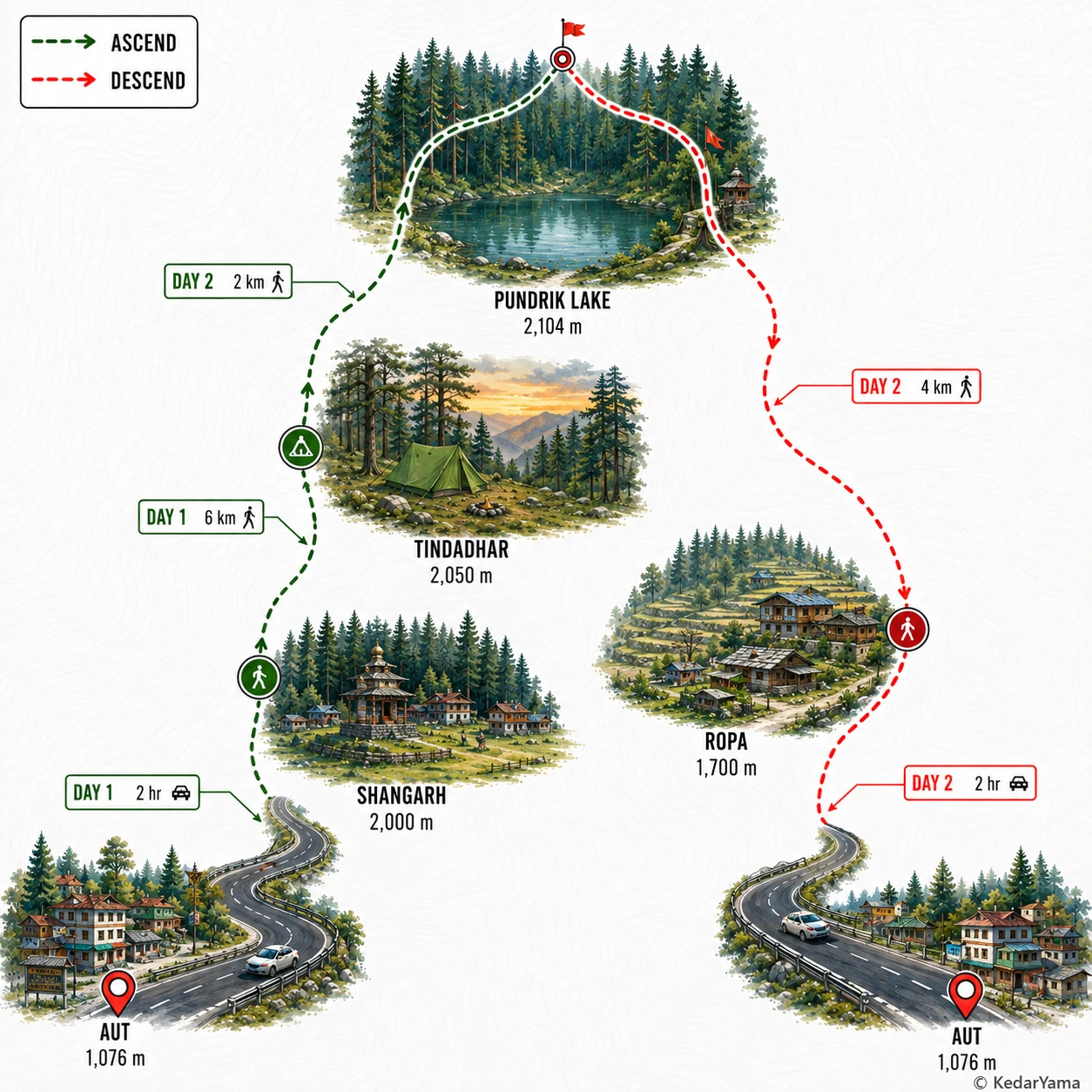
The route begins from the famous Shangarh meadows before entering dense forests of deodar, pine and oak. The climb is steady rather than steep, with soft forest paths, occasional rocky patches and a few small stream crossings. It is suitable for fit beginners while still offering enough elevation gain to feel like a proper Himalayan trek.
Spring and early summer bring pleasant trekking temperatures, blooming rhododendrons and clear mountain views. The monsoon months receive heavy rainfall that makes the trail muddy and slippery. Winters often see snowfall around Shangarh and nearby ridges, making the trail colder and occasionally snow covered.
The trek passes through mixed Himalayan forests rich in deodar, oak and pine. During spring, wildflowers bloom along the trail while birds such as Himalayan monal, woodpeckers and laughing thrushes are commonly spotted. Langurs and barking deer are occasionally seen deeper inside the forest.
The trek remains below 2,200 metres, so altitude sickness is rarely a concern. Most trekkers only notice the uphill effort during the first day's climb. Basic cardiovascular fitness and the ability to comfortably walk 5–6 hours with a light backpack are sufficient.
March – June
This is the most popular season in Shangarh. The meadow turns bright green, forests are fresh after winter, and the weather is comfortable for hiking, photography, and relaxing outdoors.
July – August
The valley becomes beautifully green, but frequent rain can make roads slippery and hiking trails muddy. Travel plans should remain flexible because of occasional landslides.
September – November
After the rains, skies become remarkably clear and temperatures stay pleasant. This is one of the best seasons for photography, forest walks, and longer hikes.
December – February
Cold temperatures and occasional snowfall transform Shangarh into a peaceful winter destination. Visitors should carry warm clothing and be prepared for changing road conditions.
Required: No
No trekking permit is generally required for this route outside protected-core areas, though local entry charges or guide recommendations may apply. Carry valid government ID.
The nearest medical facilities are at Sainj, with larger hospitals available in Aut and Kullu. Inform your homestay or local guide about your trekking plan before departure.