RM
Rohan Mehta
October 2025
“Khaliya Top gave me the best mountain panorama I've seen in Uttarakhand. The climb was manageable, and reaching the meadow just as the Panchachuli peaks caught the morning light made every step worth it.”
Kumaon Himalaya, Uttarakhand
“Short alpine hikes, glacier expeditions, and front-row views of the Panchachuli peaks from Kumaon's wild edge.”
Altitude
11483 ft
Duration
4 Days
Difficulty
Easy to Moderate
Best time
Mar – Jun Sep – Nov
Updated 10 Aug 2026
Max altitude
11,483 ft
Duration
4 Days
Total distance
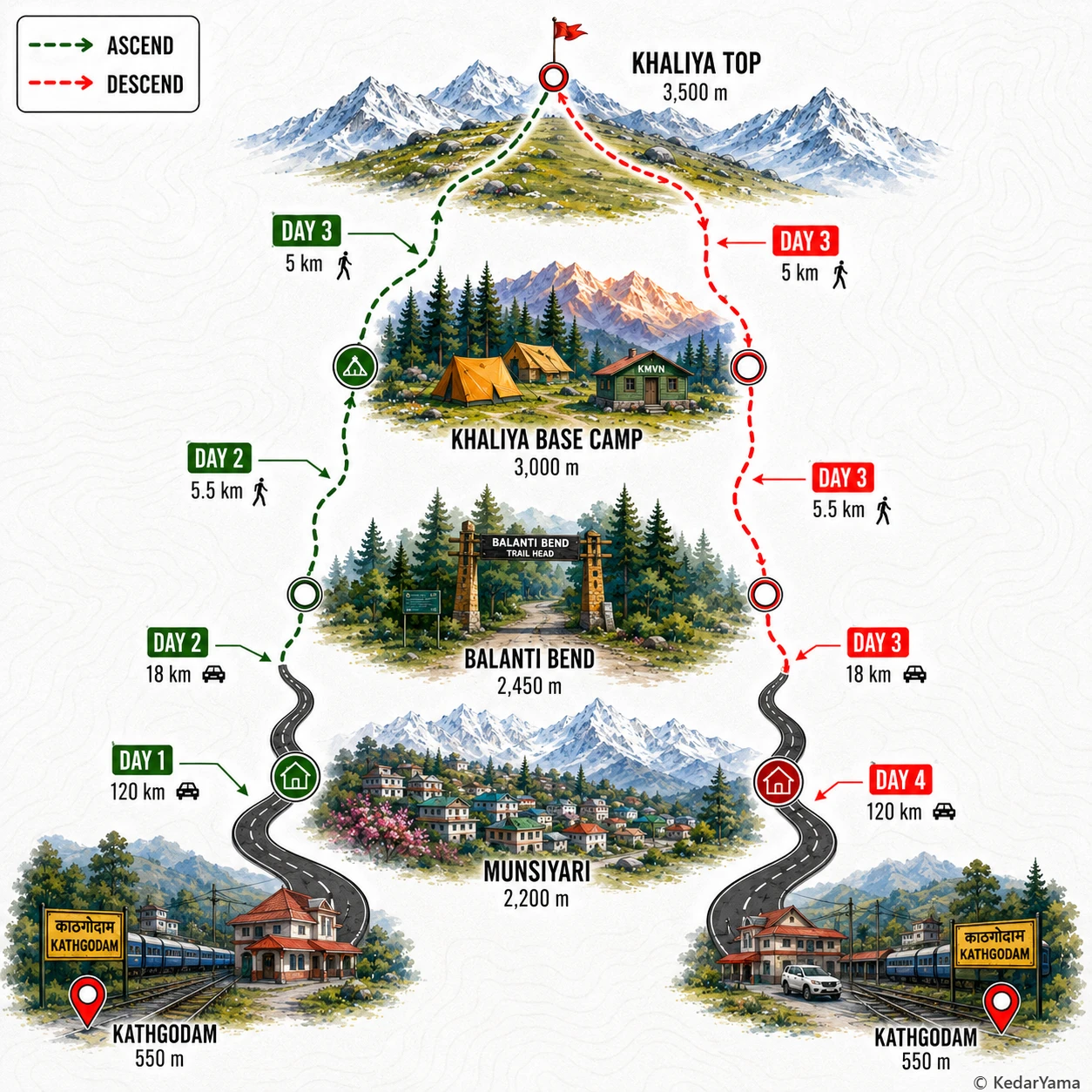
12 km
Elevation gain
4,265 ft
Trek type
Out and Back
Starting point
Balanti Bend (Khaliya Dwar)
Trail type
Forest trail, alpine meadows, ridgeline
Average cost (indicative)
₹6,500–₹9,000 per person (4D/3N package); ₹50 forest entry for day trekkers
Temp. range (°C)
-8°C to 18°C depending on season
Snow months
December to March
Rain risk
High during July–August monsoon
Best Season
March–June and September–November; winter snow from December to March
Nearest Railhead
Kathgodam
Nearest Airport
Pantnagar Airport
Network
Mobile signal available in Munsiyari only; patchy to none after the trailhead
Trekking Boots
3-Layer Clothes
50L Backpack
Hydration
Trekking Pole
Down Jacket
Gloves

Woolen Socks
Headlamp
Thermal Layers
First Aid Kit
Power Bank
Action Cam
Quick-dry Towel
Winter Gloves
Trek Gaiters
Hydration Bladder
The trek begins with a steady climb through dense oak, pine and rhododendron forests before emerging into expansive alpine meadows. The initial section has several steep switchbacks, while the upper ridge becomes gentler with open grasslands. During winter the entire upper section is snow-covered, making gaiters and microspikes useful after fresh snowfall.
Although the highest point is only around 3,500 metres, trekkers gain altitude quickly from Munsiyari. Most healthy beginners adjust well after spending a night in Munsiyari. Walk at a steady pace, stay hydrated and avoid rushing the climb, especially if arriving directly from the plains.
Spring brings blooming rhododendrons and pleasant daytime temperatures. Autumn offers the clearest Himalayan views, while winter transforms the meadows into a snowfield. Afternoon clouds often build up after lunch, so early starts reward trekkers with better visibility of Panchachuli and Nanda Devi.
The lower forest is rich in oak, pine and rhododendron, gradually giving way to alpine grasslands. Himalayan monal, koklass pheasant, langurs and musk deer are occasionally spotted in quieter stretches. The meadows bloom with wildflowers during late spring and early summer.
March – June
Pleasant weather, blooming rhododendrons, and excellent visibility make this the most popular trekking season. Both beginners and experienced trekkers enjoy comfortable conditions.
July – August
The forests become lush, but heavy rain can trigger landslides and reduce visibility. Glacier treks are generally not recommended during this period.
September – November
Fresh post-monsoon air creates the year's best mountain views. Stable weather makes this an ideal season for both short hikes and longer glacier expeditions.
December – February
Khaliya Top becomes a popular snow trek with beautiful white meadows and frozen landscapes. Temperatures drop well below freezing at higher elevations, so proper winter gear is essential.
Required: Yes
Forest entry registration is required at Khaliya Dwar. The current eco-park/forest entry fee is approximately ₹50 per person. Carry a valid government-issued photo ID.
The nearest medical facilities are available in Munsiyari. Basic first aid is available with local guides and organised trekking groups. Mobile connectivity becomes unreliable after leaving Munsiyari.