RM
Rahul Mehta
October 2025
“The sunrise from Budha Madhmaheshwar alone made every uphill step worth it. I've never seen Chaukhamba look so close.”
Garhwal Himalayas, Uttarakhand
“A rewarding Himalayan trek to the sacred Madhmaheshwar Temple beneath the towering Chaukhamba massif.”
Altitude
11473 ft
Duration
5 Days
Difficulty
Moderate
Best time
May – Jun Sep – Oct
Updated 10 Aug 2026
Max altitude
11,473 ft
Duration
5 Days
Total distance
32 km
Elevation gain
5,568 ft
Trek type
Out and Back
Starting point
Ransi Village
Trail type
Stone-paved trail through forests and alpine meadows
Average cost (indicative)
₹9,000–₹14,000 per person (guided); ₹4,000–₹7,000 DIY
Temp. range (°C)
-2°C to 18°C
Snow months
December to March (temple closed)
Rain risk
High during July and August due to monsoon
Nearest Roadhead
Ransi / Uniana
Nearest Town
Ukhimath
Best Season
May–June and September–October
Accommodation
Homestays, guesthouses and basic lodges
Trekking Boots
3-Layer Clothes
50L Backpack
Hydration
Trekking Pole
Down Jacket
Thermal Layers
Gloves

Woolen Socks
Headlamp
First Aid Kit
Power Bank
Quick-dry Towel
Action Cam
Hydration Bladder
Trek Gaiters
Winter Gloves
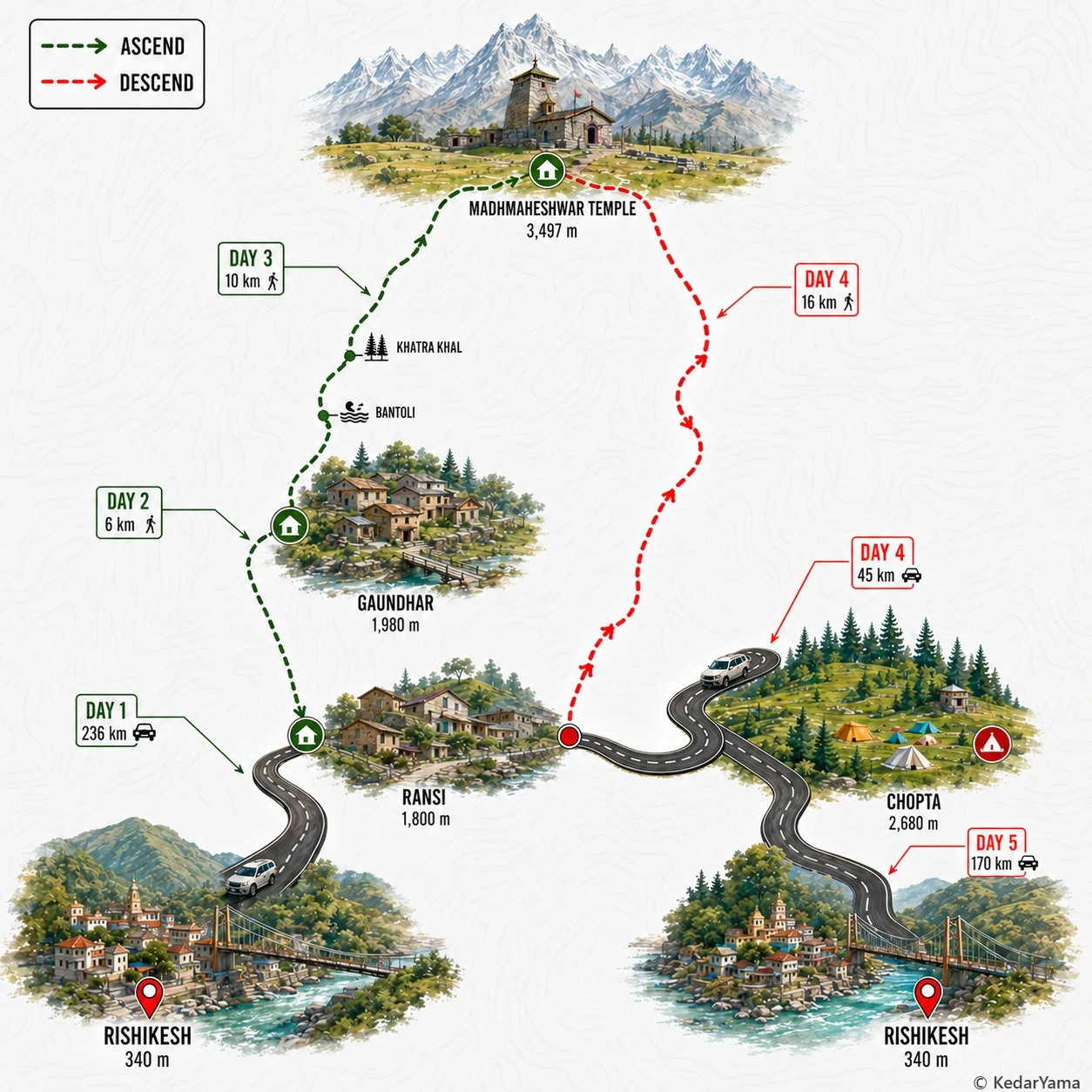
The trail follows an ancient pilgrimage route with well-laid stone paths through Garhwali villages before entering dense oak, rhododendron and maple forests. Higher up, the forest opens into lush alpine meadows and exposed ridges with spectacular Himalayan views. Several steep sections between Bantoli and Madhmaheshwar demand steady pacing but require no technical climbing.
The trek starts around 1,800 m and gradually climbs to 3,497 m at Madhmaheshwar Temple. Most trekkers acclimatize well because the ascent is spread over two days, but mild AMS symptoms can still occur. Stay hydrated, avoid alcohol, maintain a slow pace and descend immediately if symptoms worsen.
Days are usually pleasant from May to June and September to October, while nights near the temple often fall close to freezing. Afternoon clouds are common, especially before the monsoon. During July and August the trail becomes slippery with heavy rainfall and occasional landslides.
The route lies inside the Kedarnath Wildlife Sanctuary, passing forests of oak, rhododendron, deodar and birch before reaching alpine grasslands. Himalayan monal, langurs, musk deer and numerous mountain birds are regularly spotted by patient trekkers. Spring brings vibrant rhododendron blooms while autumn offers exceptionally clear mountain views.
May – June
The temple reopens and the forests are green with rhododendrons and fresh mountain vegetation. Days are comfortable for trekking while nights remain cool at higher camps.
July – August
The valley becomes intensely green but heavy rainfall can make trails slippery and increase the risk of landslides. Most trekkers avoid this season despite the beautiful scenery.
September – October
Fresh post-monsoon air brings excellent visibility of Chaukhamba and surrounding peaks. Cool temperatures and stable weather make this the favourite season for photographers and trekkers.
Required: Yes
Forest entry registration and fee are collected near the Kedarnath Wildlife Sanctuary entry at Ransi. Carry a government-issued photo ID. Additional pilgrimage registration may be required during the Char Dham season.
Nearest medical facilities are at Ukhimath, while basic assistance is available in villages along the route. In emergencies, descend toward Bantoli or Gaundhar where local help and mule transport may be arranged.