AV
Aman Verma
January 2026
“This was my first Himalayan trek, and Kuari Pass exceeded every expectation. The views of Nanda Devi from the ridge are something I'll never forget.”
Garhwal Himalayas, Uttarakhand
“Walk Lord Curzon's historic trail through oak forests and bugyals to sweeping views of Nanda Devi and Dronagiri.”
Altitude
12516 ft
Duration
6 Days
Difficulty
Moderate
Best time
Mar – Jun Sep – Nov Dec – Feb
Updated 10 Aug 2026
Max altitude
12,516 ft
Duration
6 Days
Total distance
33 km
Elevation gain
5,577 ft
Trek type
Point-to-point
Starting point
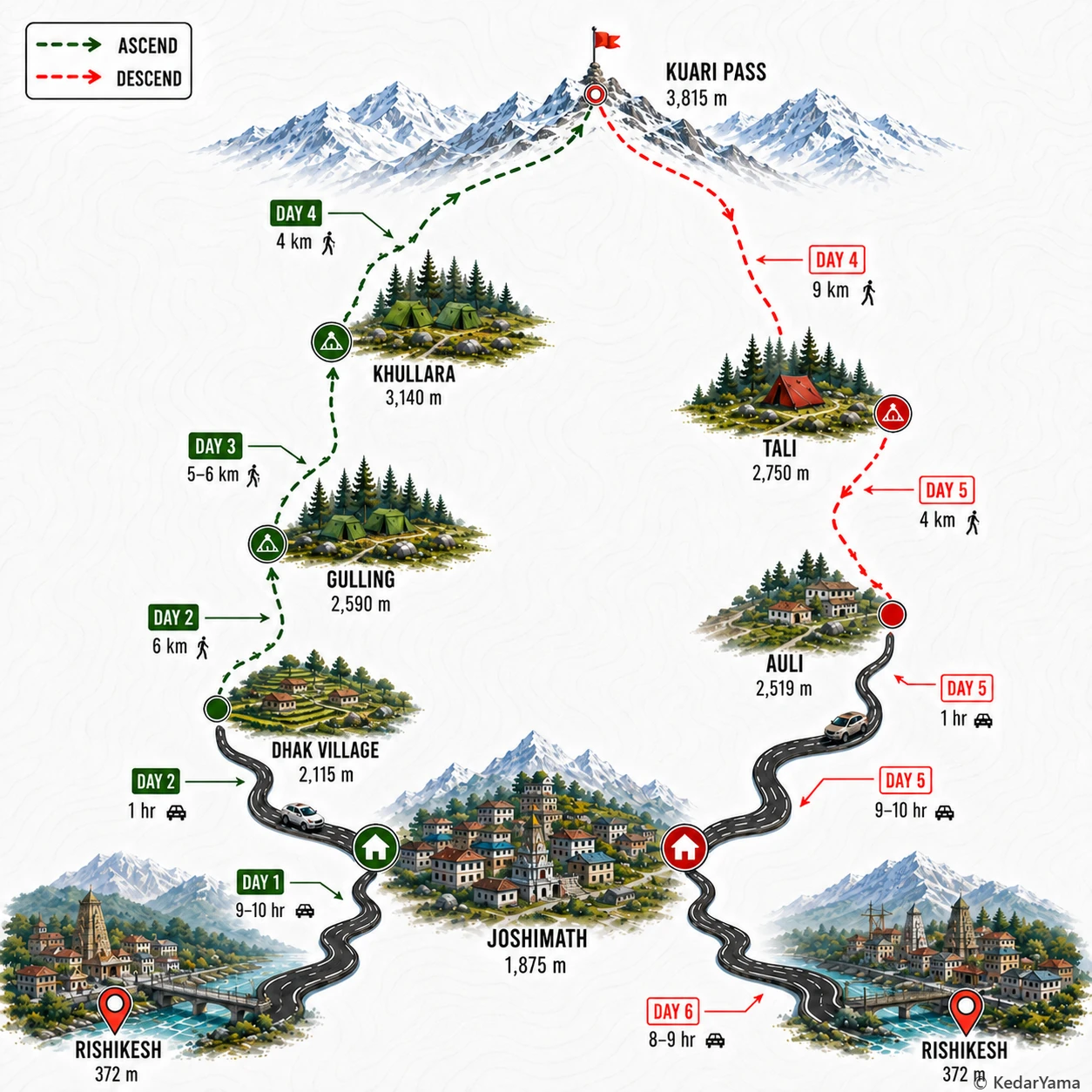
Dhak Village
Trail type
Forest trails, bugyals and mountain pass
Average cost (indicative)
₹8,500–₹11,500 per person
Temp. range (°C)
-6°C to 18°C
Snow months
December to March
Rain risk
High during July–August monsoon; avoid trekking in heavy rains
Nearest Railway Station
Rishikesh
Nearest Airport
Jolly Grant Airport, Dehradun
Base Camp
Joshimath
Best Season
March–June and September–December
Minimum Age
Around 10 years with good fitness
Trekking Boots
3-Layer Clothes
50L Backpack
Hydration
Trekking Pole
Down Jacket
Thermal Layers
Winter Gloves

Woolen Socks
Headlamp
First Aid Kit
Power Bank
Action Cam
Quick-dry Towel
Trek Gaiters
Hydration Bladder
Gloves
Kuari Pass is known for constantly changing landscapes. The route begins through terraced villages before entering dense oak and rhododendron forests, then opens into sprawling alpine meadows like Gorson Bugyal and Khullara. The final climb to the pass follows rocky ridges that are often snow-covered in winter, with gradual ascents broken by a few steeper sections.
Although the trek tops out below 4,000 metres, altitude can still affect first-time trekkers. The gradual ascent over several days helps acclimatization, but hydration, slow pacing and avoiding unnecessary exertion remain important. Mild headaches or breathlessness can occur near Kuari Pass, especially after fresh snowfall.
Spring brings blooming rhododendrons and pleasant daytime temperatures, while autumn offers crisp air and exceptionally clear mountain views. Winter transforms the trail into a snow trek with freezing nights and deep snow around the pass. The monsoon months are generally avoided because slippery trails and landslides can affect road access.
The trail passes through old-growth oak, deodar and rhododendron forests that support rich Himalayan biodiversity. Trekkers commonly spot langurs, Himalayan griffons and colourful monal pheasants, while musk deer and black bears inhabit the surrounding forests but are rarely seen. Higher up, alpine grasses replace forests and reveal uninterrupted Himalayan panoramas.
March – June
Oak and rhododendron forests become colourful while the bugyals turn bright green. Days are pleasant for trekking, with occasional patches of lingering snow in early spring.
September – November
After the monsoon, the skies clear and the Himalayan peaks look exceptionally sharp. Cool temperatures and dry trails make this one of the most popular trekking seasons.
December – February
The trail transforms into a classic winter trek with snow-covered forests, campsites, and ridges. Expect cold nights, frozen mornings, and spectacular snow landscapes.
Required: Yes
Forest entry permissions are required for the Nanda Devi buffer region and are normally arranged by registered trek operators. Trekkers should carry a government-issued photo ID. Charges are generally included in organized trek packages, while independent trekkers must obtain permits locally if applicable.
Joshimath is the nearest major town with hospitals, ATMs and emergency services. Mobile connectivity is unreliable beyond the roadhead, so groups typically rely on trek leaders, local guides and vehicle support for emergencies.