tocNavigation

OverviewRouteItineraryImagesPacking listTechnical overviewBest timeOther infoReviewsFAQ

KedarYamaKedarYama

Kedarkantha Trek

location_on

Garhwal Himalaya, Govind Wildlife Sanctuary, Uttarakhand

location_on

Garhwal Himalaya, Govind Wildlife Sanctuary

Uttarakhand, India

“Climb a snowy Himalayan summit through dense forests and frozen lakes to a sunrise you'll never forget.”

“Climb a snowy Himalayan summit through dense forests and frozen lakes to a sunrise you'll never forget.”

trending_up

Altitude

12500 ft

calendar_today

Duration

6 Days

bar_chart

Difficulty

Easy to Moderate

ac_unit

Best time

Dec – Apr Sep – Nov

Standout Experiences

  • landscapeReach a real Himalayan summit at 3,800 m with spectacular 360° sunrise views instead of stopping at a mountain pass.
  • forestWalk through snow-covered pine and oak forests that feel magical after fresh winter snowfall.
  • waterCamp beside the famous Juda Ka Talab, where the lake often freezes completely during winter.
  • hikingOne of the few beginner-friendly Himalayan treks where the final summit climb feels exciting and genuinely rewarding.

Overview

updateUpdated 13 Jul 2026

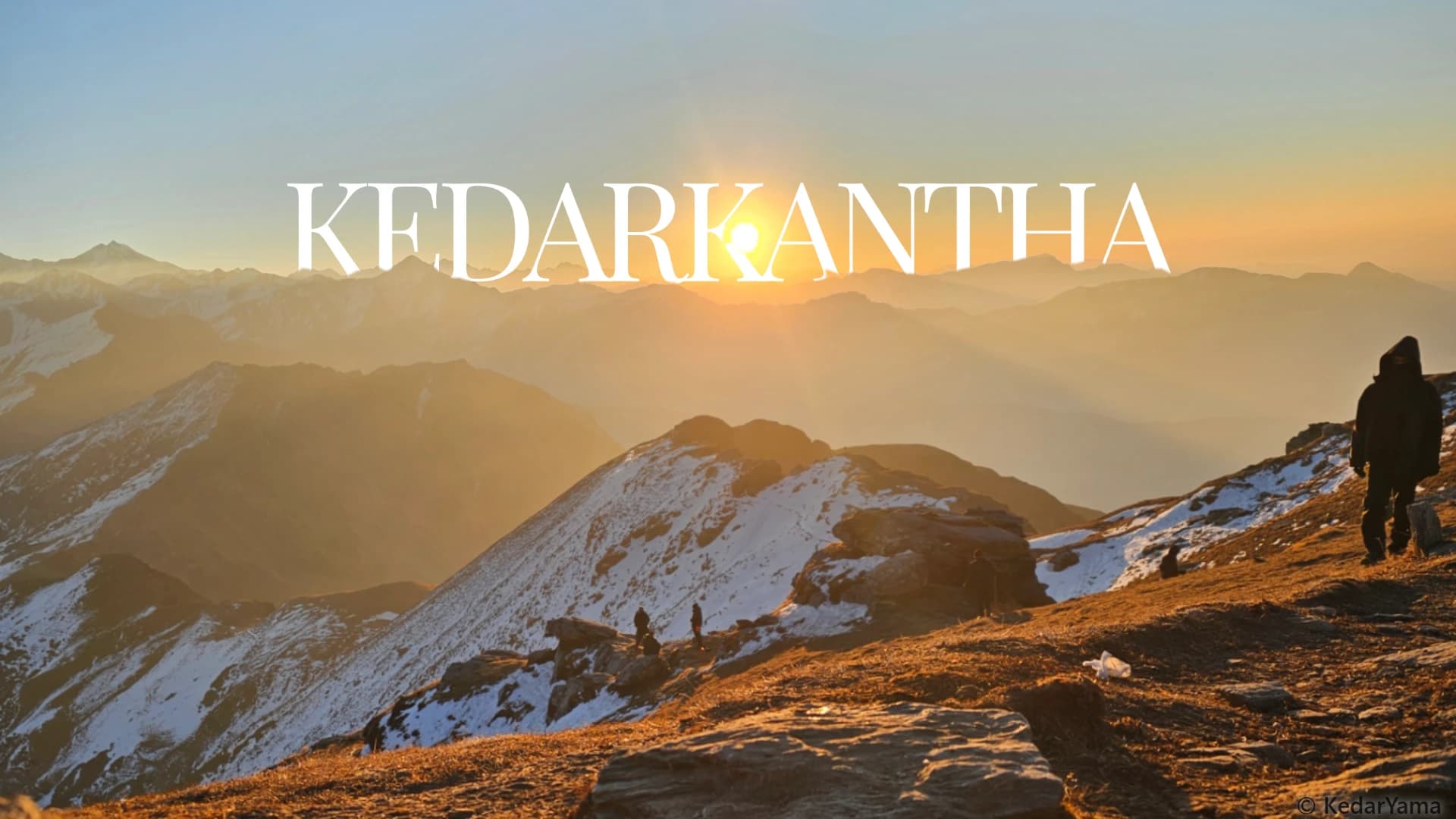
  • ▲The Kedarkantha Trek is one of the few Himalayan summit climbs that genuinely welcomes first-time trekkers without feeling easy. Starting from the mountain village of Sankri in Uttarkashi, the trail winds through thick pine, oak, and maple forests, crosses the frozen waters of Juda Ka Talab in winter, and climbs steadily to the 3,800 m (12,500 ft) summit. Every day feels different, which is why so many people return in another season after their first visit.
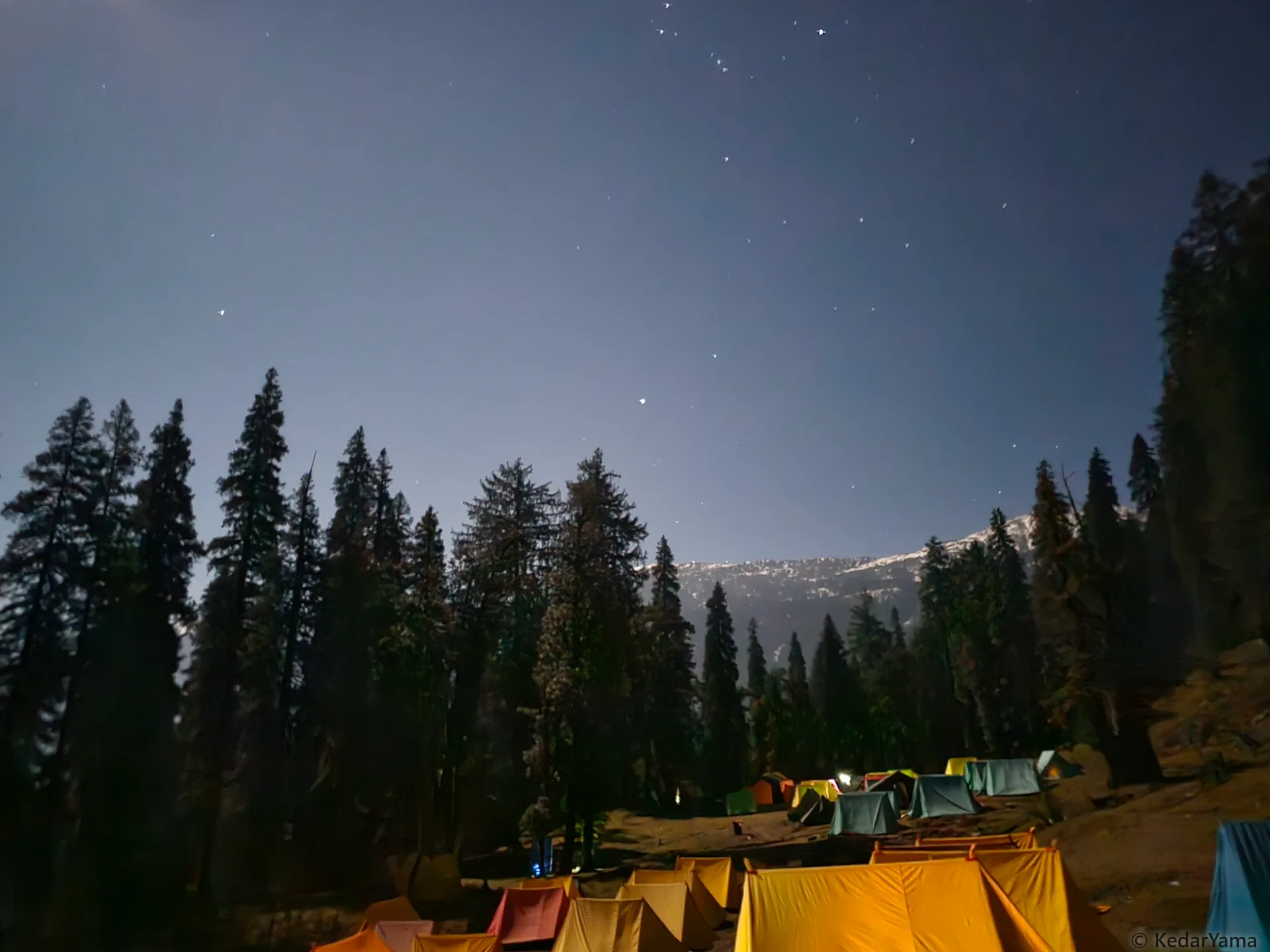
  • ▲What makes Kedarkantha special is not just the summit but everything leading up to it. You'll camp in open clearings surrounded by snow-covered trees, wake to pink Himalayan sunrises, and spend evenings under some of the clearest night skies in Uttarakhand. On summit morning, the final climb is steep enough to feel like an achievement, and the reward is a wide panorama of Swargarohini, Bandarpoonch, Black Peak (Kalanag), and the Gangotri ranges stretching across the horizon.
  • ▲Winter transforms Kedarkantha into one of India's classic snow treks, but it isn't only a December destination. Spring brings blooming rhododendrons, summer fills the forests with fresh greenery, and autumn offers crisp air with exceptionally clear mountain views. Because the trail stays accessible for much of the year outside the peak monsoon months, it remains one of the most versatile Himalayan treks for both beginners and experienced hikers.
content_paste

Trek essentials

Max altitude

12,500 ft

Duration

6 Days

Total distance

20 km

Elevation gain

3,750 ft

Trek type

Loop

Starting point

Sankri

Trail type

Forest trail through Govind Wildlife Sanctuary with alpine meadows and snowy summit ridge

Average cost (indicative)

₹6,500–₹9,500 per person (excluding travel to Dehradun)

Temp. range (°C)

-8°C to 12°C (winter), 2°C to 18°C (autumn)

Snow months

Late December to March

Rain risk

Low in winter; high during July–August monsoon

Best Season

December–April for snow, September–November for clear mountain views

Nearest Railhead

Dehradun Railway Station

Nearest Airport

Jolly Grant Airport, Dehradun

Forest Area

Govind Pashu Vihar National Park & Wildlife Sanctuary
Trek Route

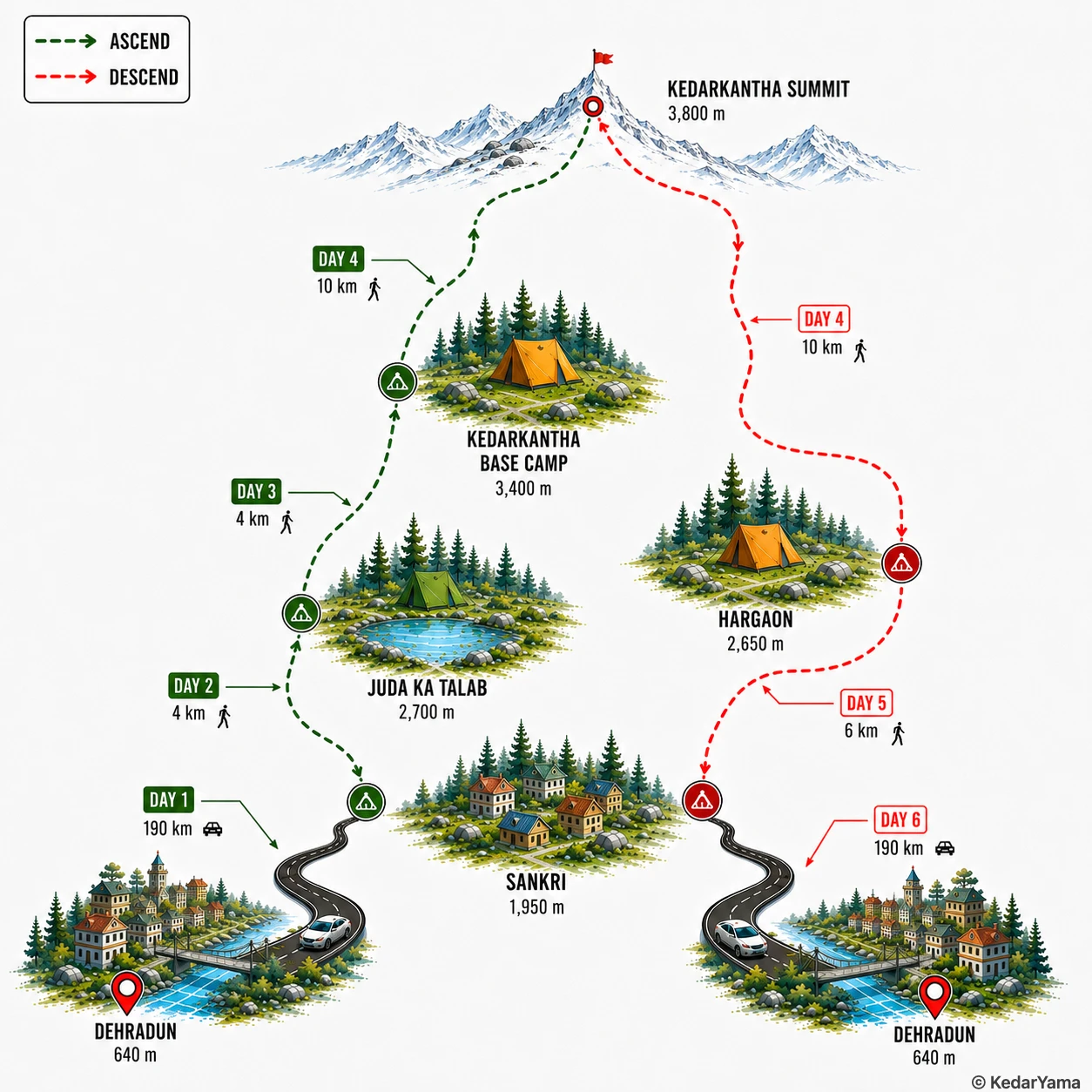
Sankri

Base village and trek starting point inside Govind Wildlife Sanctuary.

Juda Ka Talab

Beautiful forest campsite beside the small alpine lake.

Kedarkantha Base Camp

Snowy meadow campsite below the summit ridge.

Kedarkantha Summit

12,500 ft summit offering panoramic Himalayan views.

Hargaon

Forest campsite on the return route.

Sankri

Return to the base village after completing the loop.

Graphical route map — high resolution terrain visualization

Detailed Itinerary

holiday_villageStayHomestay
signal_cellular_4_barDataFull
boltPowerAvailable
  • ▲Meet around 6:00 AM in Dehradun and begin the scenic 8–10 hour drive towards Sankri, the gateway to Govind Wildlife Sanctuary.
  • ▲The road climbs gradually through Mussoorie before following the Yamuna and Tons rivers, passing hill towns like Naugaon, Purola and Mori with plenty of mountain scenery throughout the journey.
  • ▲Stop for breakfast and lunch at roadside mountain cafés before the final winding stretch through dense pine forests into Sankri.
  • ▲Reach Sankri by evening around 5:00–6:00 PM, settle into your homestay, meet the trek leader for a briefing, gear check and enjoy an early dinner before resting for the trek.

Images

Scenery image

Scenery

Packing List

Must Have

Trekking Boots

layers

3-Layer Clothes

backpack

50L Backpack

water_drop

Hydration

timeline

Trekking Pole

ac_unit

Down Jacket

thermostat

Thermal Layers

front_hand

Winter Gloves

Woolen Socks

Woolen Socks

lightbulb

Headlamp

medical_services

First Aid Kit

Good to Have

battery_charging_full

Power Bank

photo_camera

Action Cam

checkroom

Quick-dry Towel

directions_walk

Trek Gaiters

water_full

Hydration Bladder

inventory_2

Sunglasses

inventory_2

Lip Balm

inventory_2

Microspikes

Technical Overview

terrain

Trail & Terrain

The Kedarkantha trail is among the most beginner-friendly Himalayan summit climbs, combining well-defined forest paths, open meadows and a short but steeper summit ridge. The route passes through dense pine, oak and maple forests before emerging above the tree line near Kedarkantha Base Camp. During winter, fresh snow covers much of the trail, while autumn offers dry, well-packed paths. The final summit section is exposed and usually completed before sunrise for stable snow conditions and clear views.

ac_unit

Weather Throughout the Trek

Winter temperatures frequently stay below freezing at camps, dropping to around -8°C on colder nights. Daytime trekking temperatures generally remain comfortable between 2°C and 12°C depending on the month. Snowfall is most reliable from late December through February, while October and November provide crisp air, dry trails and excellent visibility of the Himalayan ranges.

info

Altitude & Acclimatization

The trek starts around 6,400 ft at Sankri and gradually gains altitude over two trekking days before the summit push at 12,500 ft. This steady ascent helps first-time trekkers acclimatize naturally. Staying hydrated, maintaining a slow walking pace and eating regular meals greatly reduce the chance of altitude-related discomfort. Although AMS is uncommon, mild headaches or breathlessness can still occur near the summit.

info

Forests & Wildlife

The trail winds through the protected forests of Govind Wildlife Sanctuary, home to towering deodar, pine, oak and maple trees. In spring, rhododendron blooms add bright colors to the slopes, while winter transforms the forests into snow-covered corridors. Trekkers occasionally spot Himalayan langurs, red foxes, barking deer and colorful Himalayan monals, especially during quieter morning hours.

landscape

Summit Experience

The summit rewards trekkers with one of the widest Himalayan panoramas in Uttarakhand. Peaks including Swargarohini, Bandarpoonch, Black Peak, Ranglana and several Garhwal summits dominate the skyline. Most groups begin the summit climb before dawn, reaching the top around sunrise when golden light spreads across the snow-covered mountains and visibility is at its best.

When to Visit

ac_unit

Classic Snow Season

December – February

This is the iconic Kedarkantha experience with fresh snowfall, frozen Juda Ka Talab, and white forests. Expect cold nights, busy departures, and unforgettable summit sunrises.

local_florist

Snow Meets Bloom

March – April

Snow still covers the upper sections while lower forests begin turning green. Rhododendrons bloom, temperatures become more comfortable, and the trail feels less harsh than peak winter.

calendar_today

Green Himalayan Forests

May – June

The snow mostly melts, revealing lush forests and colourful meadows. Pleasant weather makes this a good choice for beginners who prefer warmer trekking conditions.

calendar_today

Crystal Clear Mountain Views

September – November

After the monsoon, the forests look fresh and the skies stay remarkably clear. Expect cool temperatures, golden forests later in the season, and excellent long-distance Himalayan views.

Other Information

Logistics & inclusions

  • check_circleMost groups assemble in Dehradun around 6:00 AM before driving 8–10 hours to Sankri via Mussoorie, Naugaon, Purola and Mori.
  • check_circleShared taxis and trek operator vehicles are the most convenient transport option from Dehradun to Sankri.
  • check_circleExtra luggage can usually be stored safely at the Sankri homestay or base camp.
  • check_circleForest entry fees and camping permissions are generally included in organized trek packages.
  • check_circleATM availability is unreliable beyond Purola, so carry sufficient cash before reaching Sankri.
  • check_circleMobile connectivity is available in parts of Sankri but becomes unreliable or unavailable after leaving the village.
badge

Permits

Required: Yes

Entry permits for Govind Wildlife Sanctuary and local forest camping permissions are mandatory. Registered trek operators usually arrange all permits. Independent trekkers must obtain permissions from the forest authorities before starting the trek.

health_and_safety

Safety

Risks

  • ▲Slippery snow and ice on the summit ridge during winter.
  • ▲Cold-related illnesses including hypothermia and frostnip.
  • ▲Mild Acute Mountain Sickness near the summit.
  • ▲Rapid weather changes with snowfall, wind and poor visibility.

Precautions

  • ▲Wear waterproof trekking boots with good grip and use microspikes or crampons when provided.
  • ▲Maintain a slow, steady pace and stay hydrated throughout the climb.
  • ▲Dress in multiple warm layers and avoid remaining in wet clothing.
  • ▲Start the summit climb before sunrise and follow the trek leader's instructions closely.
  • ▲Carry personal medicines and immediately report symptoms of AMS or severe fatigue.

Emergency

The nearest major medical facilities are at Purola and Mori, while Sankri has basic healthcare support. Organized groups carry oxygen cylinders, first-aid kits and communication equipment. Evacuation is normally conducted back to Sankri before road transfer to a hospital.

Reviews

RB

Rudra Bawali

January 2025

starstarstarstarstar

“This was my first Himalayan trek, and Kedarkantha couldn't have been a better choice. The forests, snowy campsites, and summit sunrise made every step worth it.”

AS

Ananya Sharma

February 2025

starstarstarstarstar

“The climb on summit day pushed me out of my comfort zone, but standing above the clouds with the Himalayan peaks all around is something I'll never forget.”

KM

Karan Mehta

December 2024

starstarstarstarstar

“Juda Ka Talab under fresh snow looked unreal. Evenings around camp and clear night skies became my favourite part of the trek.”

Frequently Asked Questions

Is Kedarkantha Trek suitable for beginners?expand_more
When is the best time to do the Kedarkantha Trek?expand_more
Does Kedarkantha have snow in December?expand_more
How do I reach Kedarkantha Trek from Delhi?expand_more
Do I need any permit for the Kedarkantha Trek?expand_more
How cold does Kedarkantha get in winter?expand_more
Kedarkantha vs Brahmatal Trek: which is better?expand_more