AS
Ankit Sharma
October 2025
“I expected a simple weekend trek but the riverside trail completely surprised me. Camping near the lake and watching the mountains reflect in the water was the highlight of my Himachal trip.”
Dhauladhar Range, Himachal Pradesh
“A riverside forest trek from Kareri Village to a crystal-clear alpine lake beneath the Dhauladhar peaks.”
Altitude
9678 ft
Duration
3 Days
Difficulty
Easy to Moderate
Best time
May – Jun Sep – Nov
Updated 10 Aug 2026
Max altitude
9,678 ft
Duration
3 Days
Total distance
26 km
Elevation gain
3,773 ft
Trek type
Out and Back
Starting point
Kareri Village
Trail type
Forest, riverside and alpine meadow trail
Average cost (indicative)
₹3,500–₹7,500 per person
Temp. range (°C)
5°C to 22°C
Snow months
December–March
Rain risk
High during July–August monsoon
Base Town
Dharamshala
Nearest Airport
Kangra (Gaggal) Airport
Nearest Railway Station
Pathankot
Best Season
May–June and September–November
Trekking Boots
3-Layer Clothes
50L Backpack
Hydration
Trekking Pole
Down Jacket
Headlamp
First Aid Kit
Power Bank
Thermal Layers
Gloves

Woolen Socks
Quick-dry Towel
Action Cam
Hydration Bladder
Rain Cover
Sun Cap
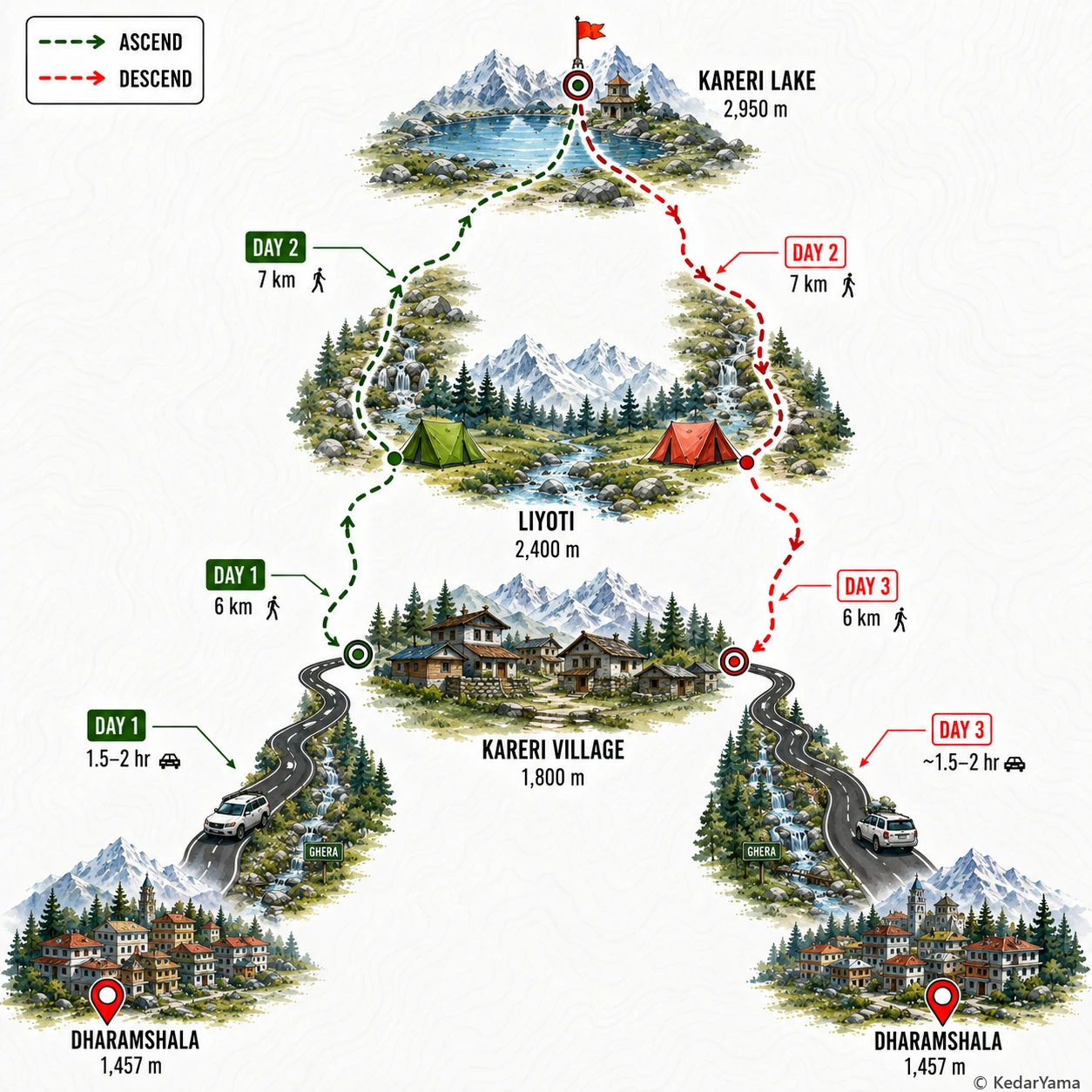
The trail begins on village paths before entering dense forests of pine, oak and deodar. Most of the first day follows the lively Nyund Nallah on dirt trails with occasional stone steps, wooden bridges and rocky patches. Beyond Liyoti the forest opens into alpine grasslands filled with boulders, finally reaching the crystal-clear glacial lake beneath the Dhauladhar range.
Spring and early summer bring pleasant days between 15°C and 22°C while nights near the lake can drop close to 5°C. September and October offer the clearest mountain views after the monsoon. Heavy rain during July and August makes stream crossings difficult, while the lake usually freezes between December and March.
Although the highest point stays below 3,000 metres, the trail gains over a thousand metres in a short distance. The climb is steady rather than technical, making it suitable for beginners with reasonable fitness. Walking or jogging regularly before the trek helps make the long second day much more comfortable.
The lower forests are rich with pine, oak, rhododendron and deodar, especially colourful during spring bloom. Himalayan birds like red-billed blue magpies, drongos and occasionally the Himalayan monal can be spotted along the route. Higher up, shepherd meadows surround the lake where Gaddi shepherds often graze their flocks during summer.
May – June
Snow has mostly melted, streams are full, and the forests are lush. Pleasant temperatures and long daylight hours make this the most popular season for first-time trekkers.
July – August
Heavy rainfall makes the trail muddy and stream crossings more challenging. Landslides and poor visibility are possible, so this season is generally avoided.
September – November
Fresh post-monsoon landscapes and crisp skies offer some of the best views of the Dhauladhar Range. Cool nights and fewer crowds make this an excellent trekking season.
December – March
The lake often freezes and snow covers higher sections of the trail. Winter trekking requires proper equipment, experience, and favourable weather.
Required: No
No regular trekking permit is required for the standard Kareri Lake trek. Trekking groups may register at the local forest or village check post when applicable, and camping should follow local forest department guidelines.
The nearest reliable medical facilities are in Dharamshala. Mobile connectivity is available in Kareri Village, becomes intermittent near Liyoti and is generally unavailable around the lake. Inform your accommodation before leaving and trek with a local guide if visiting outside the main season.