Jibhi Tirthan Valley Trek

Tirthan Valley, Kullu Himalayas, Himachal Pradesh

Forest trails, Jalori Pass, and the sacred Serolsar Lake in a relaxed Himalayan weekend.

Altitude

10236 ft

Duration

1 Day

Difficulty

Easy to Moderate

Best time

Apr – Jun Sep – Nov

Standout Experiences

  • Walk through centuries-old oak and deodar forests to the crystal-clear Serolsar Lake.
  • Enjoy one of Himachal's easiest high-altitude day treks starting directly from Jalori Pass.
  • Combine peaceful villages, riverside cafés, waterfalls, and trekking in one relaxed weekend.
  • Visit the sacred Budhi Nagin Temple beside the lake, a place locals have protected for generations.

Overview

Updated 11 Aug 2026

  • Jibhi and Tirthan Valley are perfect if you enjoy walking more than racing to a summit. The classic trek starts from Jalori Pass at about 3,120 metres and follows an easy forest trail to the sacred Serolsar Lake. Tall oak, deodar, and rhododendron trees keep much of the route shaded, making it one of the most enjoyable beginner-friendly Himalayan walks in Himachal Pradesh. Along the way, you'll hear birds instead of traffic and pass small clearings that open up to views of the Great Himalayan ranges.
  • What makes the Jibhi Tirthan trekking experience special is how naturally it fits into a slow mountain holiday. Spend your morning exploring the wooden villages of Jibhi, drive up to Jalori Pass, hike to Serolsar Lake beside the Budhi Nagin Temple, and return in time for riverside cafés or a quiet evening by the Tirthan River. If you have extra time, nearby trails to Raghupur Fort and Chehni Kothi add wide mountain panoramas and local history without demanding technical trekking experience.

Trek essentials

Max altitude

10,236 ft

Duration

1 Day

Total distance

10 km

Elevation gain

984 ft

Trek type

Out and Back

Starting point

Jalori Pass

Trail type

Forest trail

Average cost (indicative)

₹1500–3500 per person as a day trip from Jibhi including local transport and meals

Temp. range (°C)

5°C to 22°C

Snow months

December to March

Rain risk

High during July to August monsoon

Nearest Base

Jibhi

Nearest Town

Banjar

Best Season

April to June and September to November
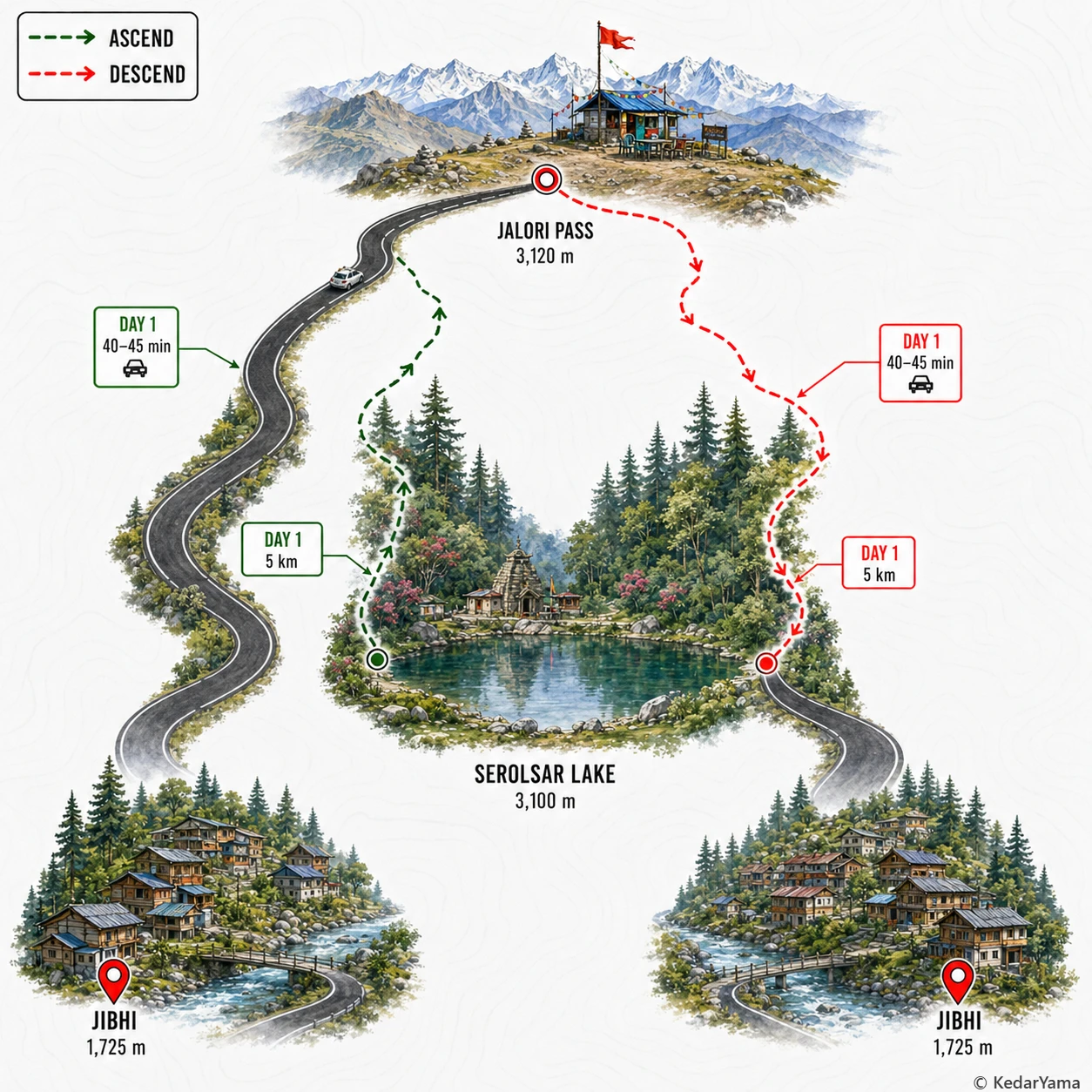
Trek Route

Graphical route map — high resolution terrain visualization

Detailed Itinerary

holiday_villageStayHomestay
signal_cellular_altDataPartial
boltPowerAvailable
  • Leave Jibhi around 7:00 AM and reach Jalori Pass by 8:00 AM after a scenic drive through Shoja. Have breakfast or tea before starting the trek by 8:30 AM.
  • The first half of the trail winds gently beneath towering deodar, oak and rhododendron trees. The broad forest path is mostly shaded, with birdsong, wildflowers in spring and occasional sightings of Himalayan monals or langurs.
  • After 2 to 3 hours of easy walking, reach the peaceful Serolsar Lake and the centuries-old Budhi Nagin Temple. The still waters reflect the surrounding forest, making it an ideal place for a relaxed lunch break and photography.
  • Begin the return walk around 1:30 PM, retracing the same forest trail. The downhill journey usually takes about 2 hours, with open viewpoints near Jalori Pass offering distant views of the Pir Panjal and Great Himalayan ranges.
  • Reach Jalori Pass by late afternoon around 3:30 to 4:00 PM and drive back to Jibhi, arriving before sunset. Spend the evening relaxing at your homestay or exploring the riverside cafés in the valley.

Packing List

Must Have

Trekking Boots

layers

3-Layer Clothes

water_drop

Hydration

timeline

Trekking Pole

inventory_2

Rain Jacket

medical_services

First Aid Kit

battery_charging_full

Power Bank

Good to Have

photo_camera

Action Cam

checkroom

Quick-dry Towel

back_hand

Gloves

lightbulb

Headlamp

Woolen Socks

Woolen Socks

Technical Overview

terrain

Forest Trail with Gentle Climbs

The trek begins from Jalori Pass and follows a broad, well-marked footpath through dense deodar, oak and rhododendron forests. The gradient is gradual for most of the route with a few rocky and root-covered sections that become slippery after rain. The trail is suitable for beginners with average fitness and does not involve technical climbing.

ac_unit

Season and Weather

Spring and autumn offer the clearest mountain views with comfortable daytime temperatures and cool mornings. During the monsoon the trail becomes muddy and leeches may appear in damp patches. Winter often brings heavy snowfall around Jalori Pass, and road access may be temporarily closed.

info

Altitude Profile

The trek starts at around 3120 metres near Jalori Pass and undulates gently through the forest before reaching Serolsar Lake at roughly 3100 metres. Since most of the route stays at similar elevation, altitude sickness is uncommon. Visitors should still stay hydrated and avoid rushing if arriving directly from the plains.

info

Wildlife and Forest

Ancient deodar, oak and rhododendron trees shade most of the trail, keeping it pleasant even during summer. Himalayan monals, koklass pheasants, langurs and numerous mountain birds are occasionally spotted in the quieter stretches. Wildflowers bloom across the forest floor during late spring and early summer.

When to Visit

local_florist

Fresh forests and clear trails

Apr – Jun

Comfortable temperatures and blooming rhododendrons make this the busiest trekking season. Trails are dry, forests are vibrant, and Jalori Pass is usually fully accessible.

calendar_today

Green but unpredictable

Jul – Aug

The valleys turn incredibly lush, but heavy rain can trigger landslides and make roads slippery. Keep travel plans flexible during this period.

calendar_today

Best mountain views

Sep – Nov

Clear skies, cool weather, and colourful forests create excellent trekking conditions. This is one of the best seasons for photography and peaceful hikes.

ac_unit

Snow around Jalori Pass

Dec – Feb

Snow transforms the landscape into a winter wonderland, though road closures are possible after heavy snowfall. Check local conditions before planning your trek.

Other Information

Logistics & inclusions

  • check_circleReach Jibhi or Shoja by road from Aut, then hire a local taxi to Jalori Pass.
  • check_circleThe drive from Jibhi to Jalori Pass takes about 40–45 minutes on a steep mountain road.
  • check_circleSmall tea stalls operate seasonally at Jalori Pass but carry enough drinking water and snacks.
  • check_circleMost trekkers return to Jibhi or Shoja the same evening; no camping is normally required.

Permits

Required: No

No trekking permit is generally required for the Jalori Pass–Serolsar Lake trail. Follow local temple customs and any temporary forest department advisories.

Safety

Risks

  • Slippery rocks and tree roots during monsoon
  • Road closures due to snowfall in winter
  • Cold winds and sudden weather changes near Jalori Pass

Precautions

  • Start early and return before dusk.
  • Carry warm layers even during summer.
  • Wear shoes with good grip and avoid trekking during heavy rain or snowfall.
  • Keep sufficient drinking water as refill options are limited.

Emergency

Mobile coverage is patchy beyond Jalori Pass. The nearest medical facilities are at Banjar, while larger hospitals are available at Kullu.

Reviews

Frequently Asked Questions

Is the Jibhi Tirthan Valley trek suitable for beginners?expand_more
What is the best time for trekking in Jibhi and Tirthan Valley?expand_more
How do I reach the Jibhi Tirthan Valley trek from Delhi?expand_more
Can I see snow on the Jibhi trek?expand_more
Do I need a permit for the Jibhi Serolsar Lake trek?expand_more
How difficult is the Serolsar Lake trek from Jalori Pass?expand_more
Jibhi Tirthan Valley or Kasol – which is better for trekking?expand_more