RS
Rahul Sharma
June 2026
“I chose Deepgot because I wanted something quieter than Triund, and it delivered exactly that. The ridge views at sunset were incredible and we barely met another trekking group all day.”
Dhauladhar Range, Himachal Pradesh
“A hidden Dhauladhar ridge trek above Dharamshala with quiet forests, open meadows, and sweeping mountain panoramas.”
Altitude
9432 ft
Duration
3 Days
Difficulty
Easy to Moderate
Best time
Mar – Jun Sep – Nov
Updated 11 Aug 2026
Max altitude
9,432 ft
Duration
3 Days
Total distance
13 km
Elevation gain
2,789 ft
Trek type
Out and Back
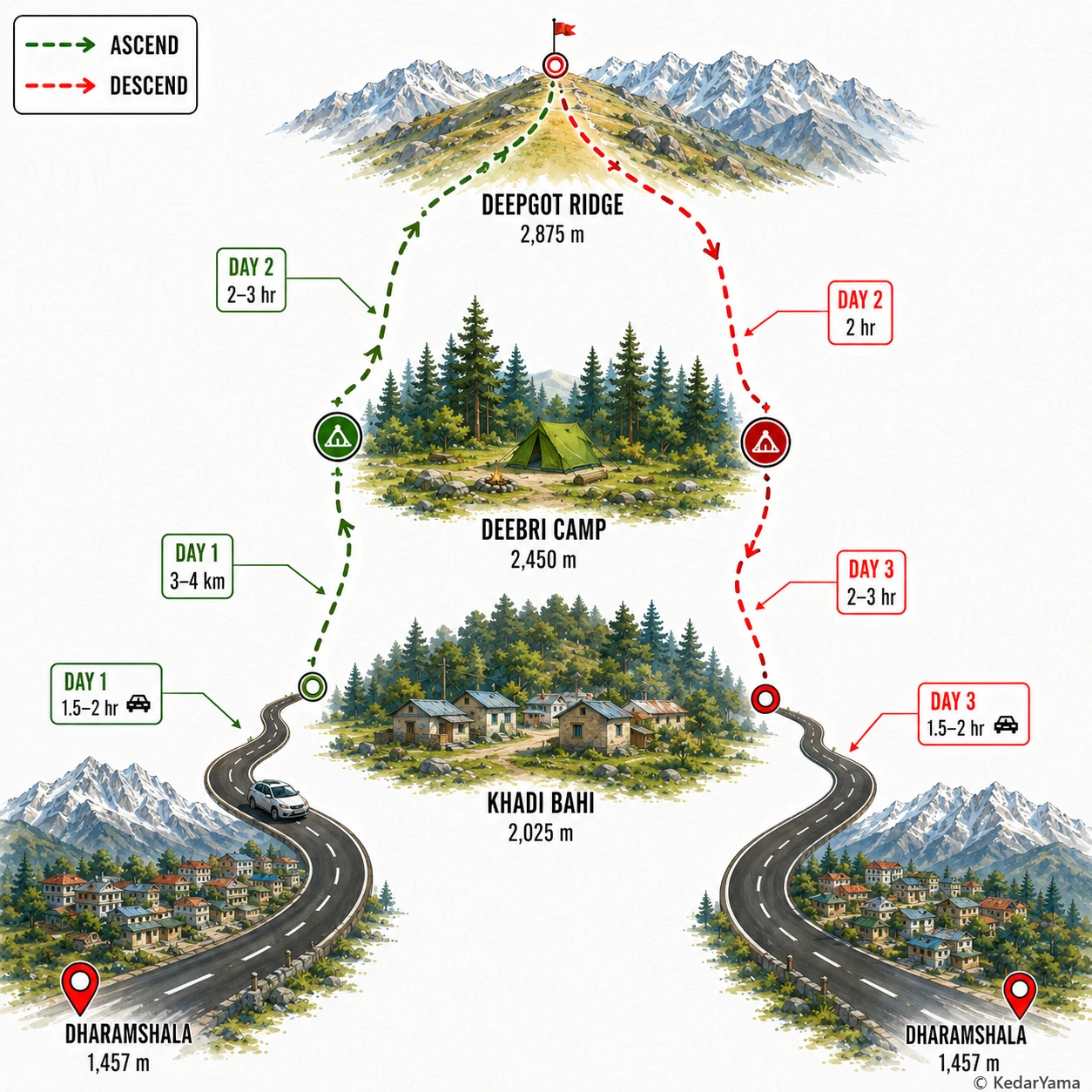
Starting point
Khadi Bahi
Trail type
Forest trail with ridge walk
Average cost (indicative)
₹8,500–11,000 per person including camping and transfers from Dharamshala
Temp. range (°C)
5°C to 22°C (trekking season)
Snow months
December to February
Rain risk
High during July–September monsoon
Nearest Town
Dharamshala
Nearest Airport
Kangra (Gaggal) Airport
Nearest Railway Station
Pathankot Junction
Best Season
March–June and October–November
Trekking Boots
3-Layer Clothes
50L Backpack
Hydration
Down Jacket
Headlamp
First Aid Kit
Trekking Pole
Power Bank
Quick-dry Towel
Action Cam
Gloves

Woolen Socks
The trek begins through dense oak, pine and mixed Himalayan forest before opening onto grassy clearings and broad ridges. The footpath is generally well defined but contains loose soil, roots and occasional rocky stretches. The summit section is more exposed, rewarding trekkers with uninterrupted views across the Dhauladhar range.
Spring and early summer offer pleasant trekking temperatures with cool mornings and comfortable afternoons. Nights remain cold at camp, often dropping below 10°C even in summer. During the monsoon the trail becomes slippery and leeches may be encountered in forest sections.
Although the trek stays below 3,000 metres, the continuous uphill climb can feel demanding for beginners. There is little risk of serious altitude sickness, but maintaining a steady pace and drinking enough water makes the climb much more comfortable. Most trekkers adapt well without acclimatization.
The trail passes through rich Himalayan forests filled with oak, pine and seasonal wildflowers. Himalayan birds such as the monal and laughing thrushes are occasionally spotted, while barking deer and langurs are sometimes seen deeper in the forest. Early morning is the best time for wildlife sightings.
March – June
Spring is the most popular season with pleasant temperatures, green forests and reliable mountain views. Days are comfortable for trekking while nights remain cool.
July – August
The forests become vibrant but frequent rain can make the trail slippery and reduce visibility. Flexible plans are recommended during this period.
September – November
Fresh post-monsoon air creates excellent long-distance views and comfortable trekking weather. This is often considered the finest season for photography.
December – February
Winter brings cold temperatures and occasional snowfall depending on weather patterns. Trail conditions can change quickly, so experience and proper gear become more important.
Required: No
No special trekking permit is normally required for Indian visitors on this route, though local forest regulations may change. Organized operators handle any local entry formalities if applicable.
The nearest major medical facilities are in Dharamshala. Inform your trek leader immediately in case of injury or severe weather. Mobile coverage is intermittent beyond Khadi Bahi.