RS
Ritika Sharma
November 2025
“This was my first Himalayan trek and I couldn't have picked a better one. The meadows felt endless, and the sunrise over Bandarpoonch is something I'll never forget.”
Garhwal Himalayas, Uttarakhand
“Walk across Uttarakhand's endless alpine meadows with wide Himalayan views and magical winter snowfields.”
Altitude
11830 ft
Duration
6 Days
Difficulty
Easy to Moderate
Best time
Mar – Jun Sep – Feb
Updated 10 Aug 2026
Max altitude
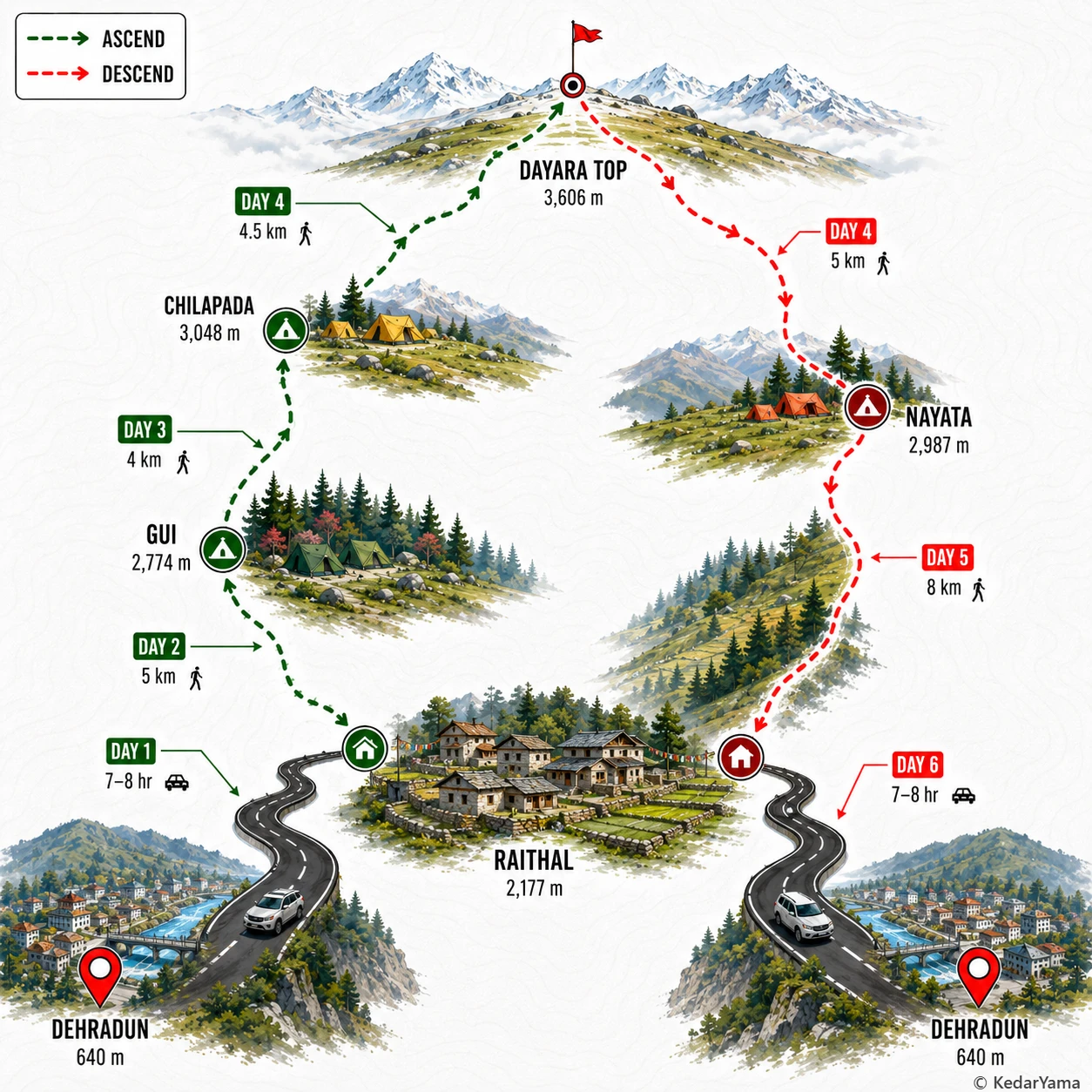
11,830 ft
Duration
6 Days
Total distance
21 km
Elevation gain
4,688 ft
Trek type
Point to Point
Starting point
Raithal
Trail type
Forest trails and alpine meadows
Average cost (indicative)
₹7,500–₹10,000 per person (ex-Dehradun)
Temp. range (°C)
-5°C to 20°C
Snow months
December to March
Rain risk
High during July and August; avoid peak monsoon
Nearest Railway Station
Dehradun
Nearest Airport
Jolly Grant Airport, Dehradun
Network Availability
Good till Raithal, weak at Gui, unavailable beyond
Best Seasons
December–March, April–June, September–November
Trekking Boots
3-Layer Clothes
50L Backpack
Hydration
Trekking Pole
Down Jacket
Thermal Layers
Gloves

Woolen Socks
Headlamp
First Aid Kit
Power Bank
Action Cam
Quick-dry Towel
Winter Gloves
Trek Gaiters
Hydration Bladder
Dayara Bugyal is one of the easiest Himalayan meadow treks with well-defined forest paths, grassy ridges and broad alpine meadows. The climbs are gradual for most of the trek, making it suitable for beginners. Only the final stretch towards Dayara Top feels steeper, especially when covered with snow. During winter the trail can become icy, requiring careful footing.
Spring brings blooming rhododendrons and pleasant daytime temperatures, while summer offers lush green meadows with cool mornings and evenings. Autumn provides crystal-clear mountain views and dry weather. Winter transforms the entire meadow into a snowfield with temperatures dropping below freezing at night.
The trail passes through dense oak, maple and rhododendron forests before opening into one of Uttarakhand's largest alpine meadows. Bird lovers often spot Himalayan monals, laughing thrushes and woodpeckers. Langurs and barking deer are occasionally seen in the forests, while the meadows bloom with wildflowers after the snow melts.
Although the trek reaches 11,830 ft, the altitude gain is gradual over multiple days, giving trekkers enough time to adapt. Mild breathlessness is normal during the final climb to Dayara Top. Staying hydrated, maintaining a slow pace and eating regular meals greatly reduce the chances of altitude-related discomfort.
March – June
Snow slowly melts to reveal bright green meadows filled with seasonal flowers. Days are pleasant for trekking, while mornings and nights remain cool with excellent mountain views.
July – August
Frequent rain makes the forest trails slippery and clouds often hide the mountain views. Most organised departures pause during this period because of weather conditions.
September – November
Fresh air, dry trails and clear skies make this one of the most scenic seasons. The meadows stay green while distant Himalayan peaks appear sharp throughout the day.
December – February
The grasslands disappear beneath fresh snow, turning the trek into one of India's finest beginner-friendly winter adventures. Expect freezing nights, snowy trails and unforgettable sunrise views.
Required: Yes
Forest entry permission is mandatory. Organised trekking companies usually arrange the permits and applicable forest fees. Independent trekkers should obtain permission locally before starting the trek.
The nearest major medical facilities are in Uttarkashi. Mobile connectivity is reliable until Raithal but becomes intermittent after Gui and is mostly unavailable near higher camps. Trek leaders generally carry first-aid kits, oxygen cylinders and emergency communication devices.