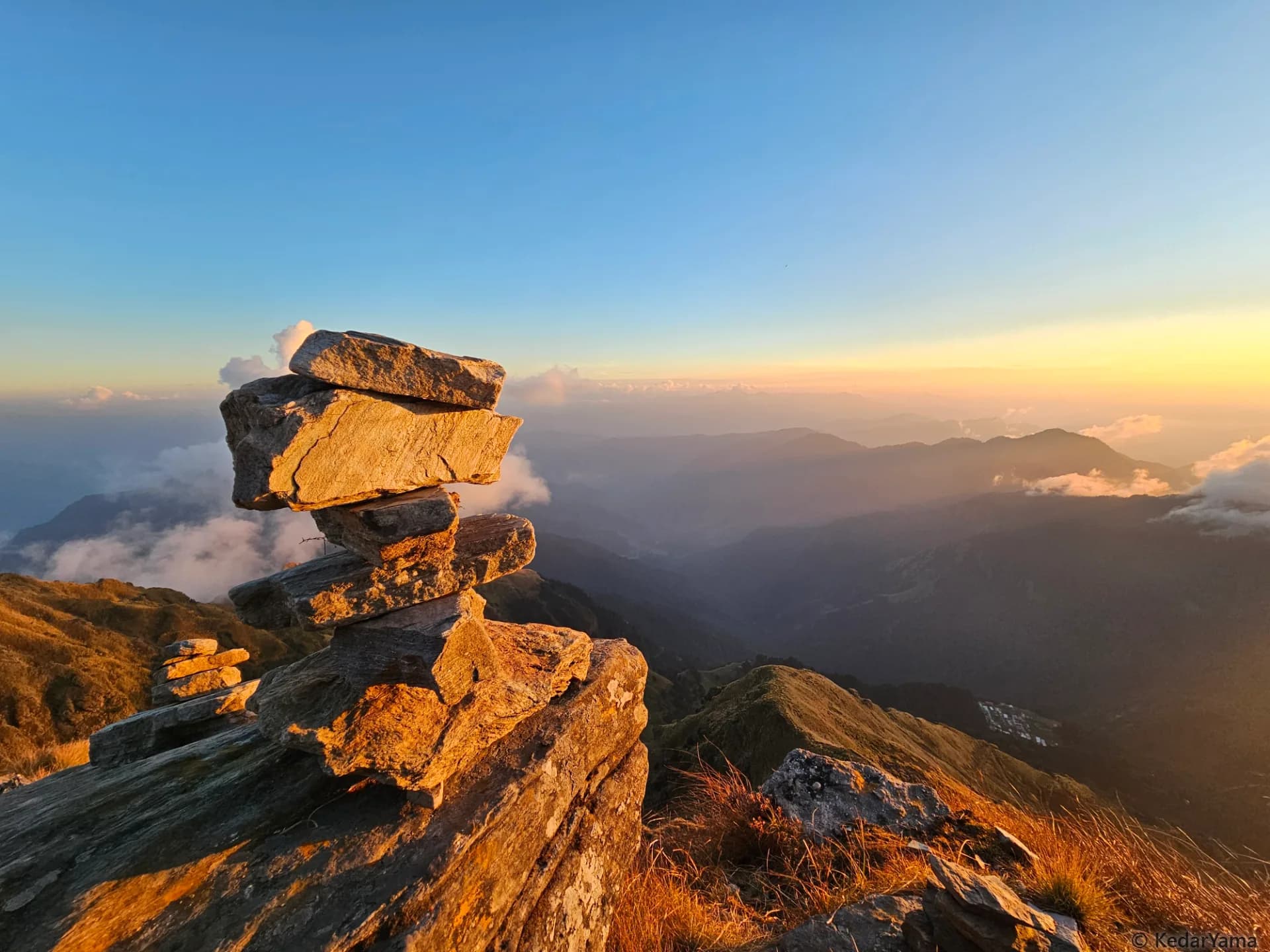
Scenery
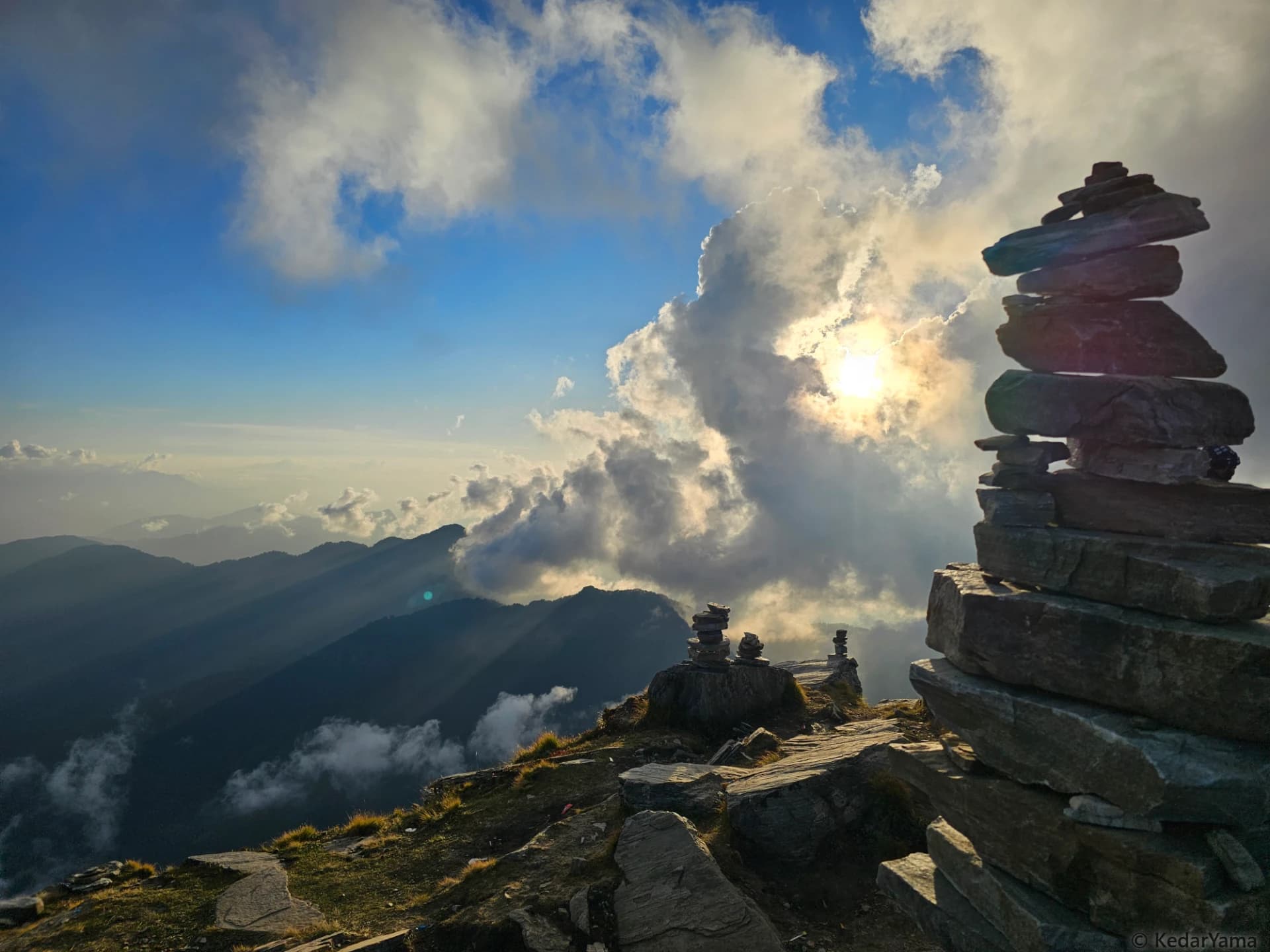
Garhwal Himalayas, Kedarnath Wildlife Sanctuary, Uttarakhand
“A short Himalayan climb through forests to Tungnath Temple and a sunrise summit with unforgettable 360° mountain views.”
Altitude
12083 ft
Duration
3 Days
Difficulty
Easy to Moderate
Best time
Mar – Jun Sep – Nov Dec – Feb
Updated 15 Jul 2026
Max altitude
12,083 ft
Duration
3 Days
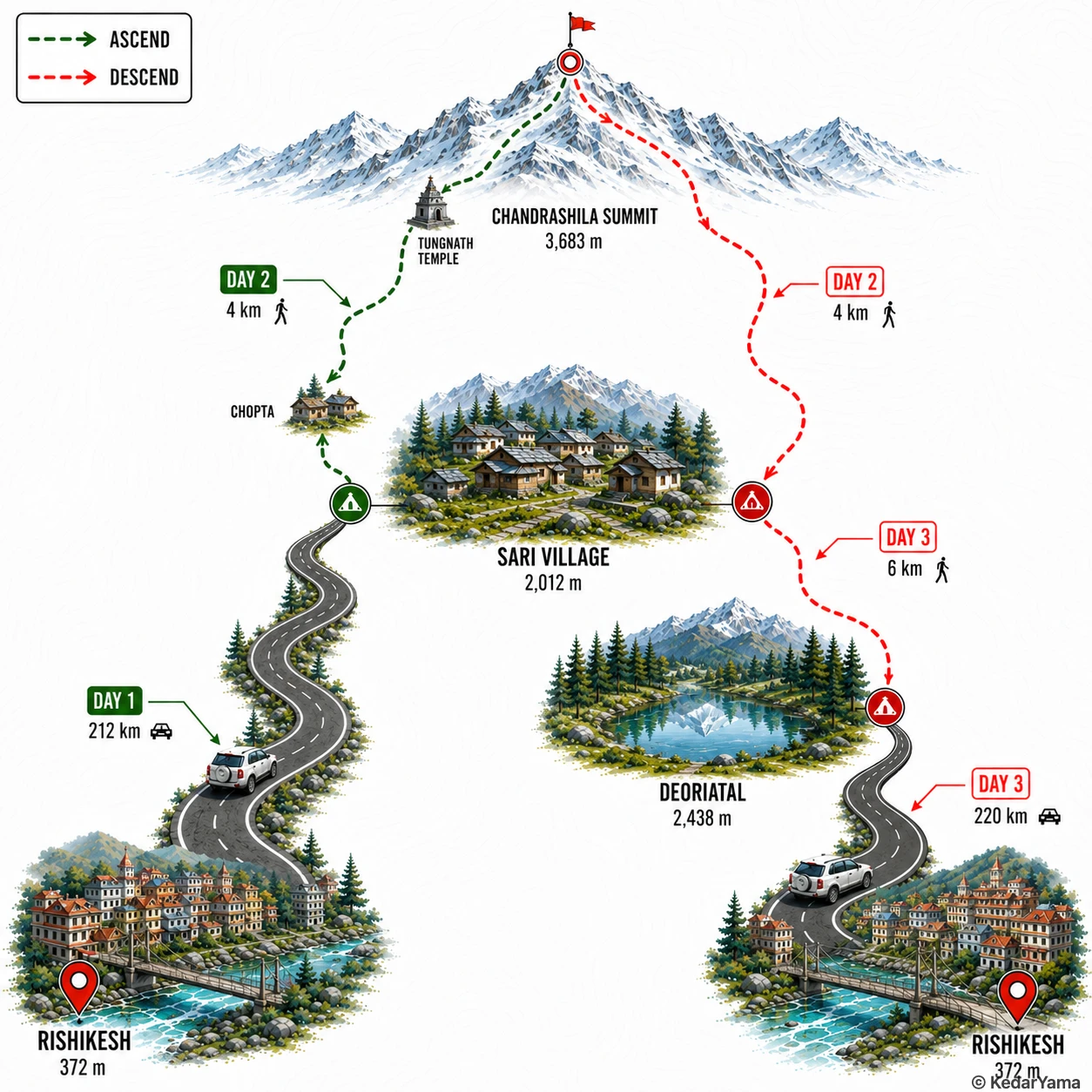
Total distance
14 km
Elevation gain
5,482 ft
Trekking Boots
3-Layer Clothes
Hydration
Trekking Pole
Down Jacket
Gloves

Woolen Socks
Headlamp
Thermal Layers
First Aid Kit
Power Bank
Action Cam
Quick-dry Towel
Winter Gloves
Trek Gaiters
Hydration Bladder
The trek starts on a broad stone-paved pilgrimage path that climbs steadily through dense oak, rhododendron and deodar forests before opening into alpine meadows near Tungnath. The final stretch to Chandrashila is steeper with rocky steps and exposed ridgelines. During winter the same trail is usually covered in snow and often requires careful footing, especially on the last ascent.
Although the distance is short, the rapid climb from Chopta to nearly 3,700 metres makes the trek feel more demanding than the numbers suggest. Most healthy beginners can complete it with steady pacing, regular hydration and short breaks. If travelling directly from the plains, spending a night at Chopta before the summit attempt helps with acclimatization.
Spring brings blooming rhododendrons and pleasant trekking temperatures, while autumn offers crystal-clear Himalayan views. Winter transforms the trail into a snow trek with sub-zero mornings and deep snow near Tungnath and Chandrashila. The monsoon season receives frequent rain, slippery paths and occasional road disruptions.
The lower forest is rich with oak, maple, deodar and rhododendron trees that burst into bright red blooms during spring. Himalayan monals, langurs and several mountain bird species are commonly spotted by patient trekkers. Once above the tree line, vast bugyals and panoramic Himalayan ridges dominate the landscape.
March – April
The forests around Chopta come alive with bright red and pink rhododendron flowers. Days are pleasant, nights stay cool, and the mountain views improve as winter ends.
May – June
Comfortable temperatures and mostly clear skies make this the easiest season for beginners. Meadows turn green and long Himalayan views are common on clear mornings.
September – November
After the monsoon, the air becomes clean and visibility is excellent. This is one of the best seasons for photography and sunrise from Chandrashila.
December – February
Fresh snowfall transforms the entire trail into a white landscape. Expect colder temperatures, icy sections and occasional road disruptions after heavy snow.
Required: No
No trekking permit is normally required for the standard Chopta–Tungnath–Chandrashila route. Entry or parking charges may apply at local forest check posts, and winter restrictions can be imposed during heavy snowfall.
The nearest medical facilities are at Ukhimath, while larger hospitals are available at Rudraprayag. Mobile connectivity is unreliable above Chopta, so inform your accommodation before leaving for the summit.


