Bansi Narayan Trek with Badrinath

Garhwal Himalayas, Urgam Valley, Uttarakhand

A forest trek to the ancient Bansi Narayan Temple, followed by darshan at sacred Badrinath.

Altitude

11772 ft

Duration

5 Days

Difficulty

Moderate

Best time

May – Jun Sep – Oct

Standout Experiences

  • Walk through the peaceful Urgam Valley to an ancient Vishnu temple that sees only a fraction of the visitors found on major pilgrimage routes.
  • Combine a forest trek with darshan at Badrinath, one of India's most sacred Himalayan temples, in a single journey.
  • Enjoy uninterrupted views of peaks like Nanda Devi and Dronagiri from open ridges above the temple on clear autumn mornings.
  • Experience traditional Garhwali villages, old stone temples and quiet mountain trails instead of crowded tourist hotspots.

Overview

Updated 11 Aug 2026

  • The Bansi Narayan Trek is one of Garhwal's quieter temple hikes, beginning in Devgram above the Urgam Valley and climbing through oak and rhododendron forests to the centuries-old Bansi Narayan Temple. Unlike the crowded pilgrimage routes nearby, you'll spend most of the day walking through forests, open meadows and peaceful ridgelines with only the sounds of birds and mountain streams for company. On clear days, the trail rewards you with wide views of Nanda Devi, Dronagiri and other Himalayan giants.
  • Pairing the trek with Badrinath creates a journey that blends trekking with one of India's most important Char Dham shrines. After completing the forest trail to Bansi Narayan, you continue by road to Badrinath, where the dramatic setting below Neelkanth Peak adds another unforgettable chapter to the trip. The combination works especially well for travellers who want both a rewarding Himalayan hike and a meaningful spiritual experience without committing to a long high-altitude expedition.
  • Although the trek is not extremely high, it feels wonderfully remote. Ancient temples, traditional villages, Himalayan wildlife, seasonal wildflowers and uncrowded mountain paths make it very different from the busier trekking circuits around Joshimath. Visit during May and June for blooming forests or September and October for crisp mountain views and comfortable trekking weather.

Trek essentials

Max altitude

11,772 ft

Duration

5 Days

Total distance

28 km

Elevation gain

2,700 ft

Trek type

Out and Back

Starting point

Badrinath

Trail type

Forest trail, bugyals and ridge walk

Average cost (indicative)

₹10,000–16,000 per person from Haridwar (group departure)

Temp. range (°C)

-2°C to 18°C

Snow months

December to April

Rain risk

High during July–August monsoon

Best Season

May–June and September–October

Nearest Railway Station

Rishikesh

Nearest Airport

Jolly Grant Airport, Dehradun

Network

BSNL/Jio work intermittently in Badrinath only
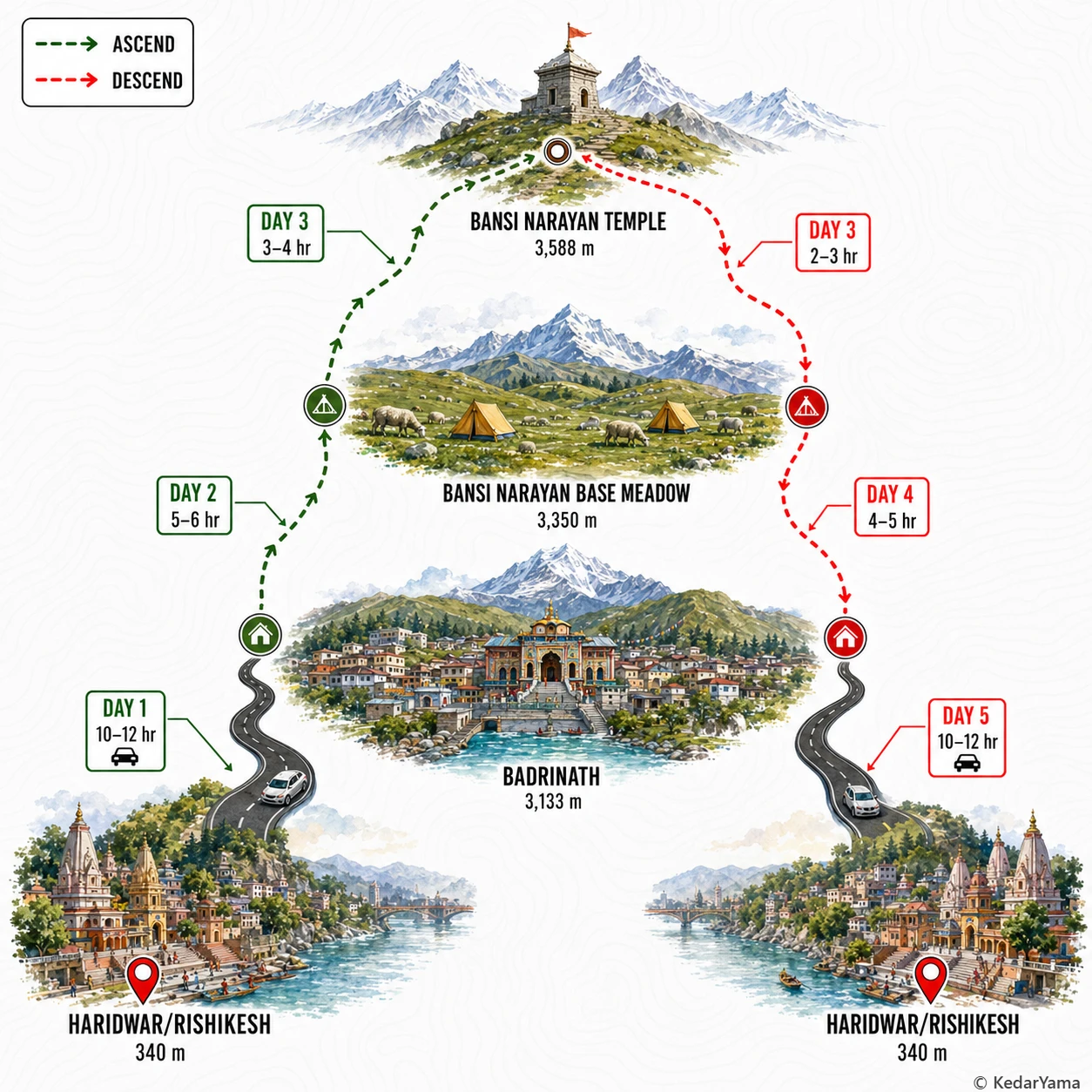
Trek Route

Graphical route map — high resolution terrain visualization

Detailed Itinerary

holiday_villageStayHomestay
signal_cellular_altDataPartial
boltPowerAvailable
  • Leave before sunrise for the 10–12 hour mountain drive that follows the Alaknanda valley through Devprayag, Rudraprayag, Karnaprayag, Nandprayag, Chamoli and Joshimath before climbing to Badrinath.
  • Expect breakfast and lunch stops along the highway while passing dramatic river confluences, deep gorges and changing Himalayan landscapes.
  • Reach Badrinath by evening, check into your hotel or guesthouse, take a short acclimatization walk and rest early because tomorrow starts above 3,000 metres.

Packing List

Must Have

Trekking Boots

backpack

50L Backpack

layers

3-Layer Clothes

ac_unit

Down Jacket

thermostat

Thermal Layers

water_drop

Hydration

timeline

Trekking Pole

back_hand

Gloves

Woolen Socks

Woolen Socks

lightbulb

Headlamp

medical_services

First Aid Kit

Good to Have

battery_charging_full

Power Bank

checkroom

Quick-dry Towel

photo_camera

Action Cam

front_hand

Winter Gloves

water_full

Hydration Bladder

directions_walk

Trek Gaiters

Technical Overview

terrain

Trail & Terrain

The trek begins from Badrinath and climbs through mixed forests of oak, birch and rhododendron before opening into expansive alpine meadows. The final approach to Bansi Narayan Temple follows grassy ridges with rocky patches and a few steeper climbs. There are no glaciers or technical sections, but sustained ascents require good fitness.

info

Altitude & Acclimatization

Since Badrinath itself sits above 3,100 metres, trekkers gain altitude quickly. Spending a night in Badrinath before starting greatly reduces the risk of Acute Mountain Sickness. Hydration, slow walking and avoiding alcohol are strongly recommended.

ac_unit

Weather

Days remain pleasant during summer with cool mountain breezes, while mornings and nights become cold. Post-monsoon brings the clearest Himalayan views but temperatures drop close to freezing after sunset. Afternoon clouds commonly develop even in fair weather.

info

Forest & Wildlife

The trail passes through rich Himalayan vegetation including oak, rhododendron, birch and alpine grasslands. In spring the rhododendrons bloom brilliantly. Himalayan monal, musk deer, Himalayan griffon and other mountain birds are occasionally spotted in quieter stretches.

When to Visit

local_florist

Blooming Forest Season

May – June

Oak and rhododendron forests are at their most colourful, temperatures are comfortable and mountain views are excellent. This is one of the most popular times for combining the trek with Badrinath.

calendar_today

Rainy Season

July – August

Heavy rainfall can make trails slippery and increase the risk of landslides on mountain roads. Trekking is generally not recommended during this period.

calendar_today

Clear Himalayan Views

September – October

Fresh post-monsoon skies bring the clearest mountain panoramas of the year. Pleasant weather and stable trail conditions make this an excellent trekking season.

ac_unit

Snow Season

November – April

Snowfall and cold temperatures can limit access to both the trek and Badrinath. The route is suitable only when local conditions permit.

Other Information

Logistics & inclusions

  • check_circleReach Haridwar or Rishikesh and drive via Devprayag, Rudraprayag, Karnaprayag, Chamoli and Joshimath to Badrinath.
  • check_circleSpend one night at Badrinath for acclimatization before beginning the trek.
  • check_circleBaggage not required on the trail can usually be left at the hotel in Badrinath.
  • check_circleLocal guides are recommended because trail markings become faint in meadow sections.
  • check_circleCarry sufficient cash as ATMs are unreliable beyond Joshimath.

Permits

Required: Yes

Forest permission may be required depending on the current season and route regulations. Identity proof is mandatory. If travelling with an organized operator, permits are generally arranged in advance.

Safety

Risks

  • Altitude sickness due to high starting elevation
  • Slippery trails after rain
  • Rapid afternoon weather changes
  • Limited mobile connectivity
  • Black ice or lingering snow early in the season

Precautions

  • Acclimatize overnight in Badrinath.
  • Start trekking early each morning.
  • Carry at least 2 litres of water and rain protection.
  • Stay with the group across meadow sections.
  • Layer clothing to manage changing temperatures.

Emergency

Nearest major medical facilities are available at Joshimath. Basic medical assistance is available at Badrinath during the pilgrimage season. In emergencies, evacuation is generally coordinated from Badrinath.

Reviews

Frequently Asked Questions

Is the Bansi Narayan Trek suitable for beginners?expand_more
What is the best time to do the Bansi Narayan Trek with Badrinath?expand_more
How do I reach the Bansi Narayan Trek from Delhi?expand_more
Can I visit Badrinath on the same trip?expand_more
Do I need a permit for the Bansi Narayan Trek?expand_more
Will I see snow on the Bansi Narayan Trek?expand_more
Bansi Narayan Trek or Valley of Flowers: which should I choose?expand_more